Are Budapest's Baths Actually Clean? An Honest Look
Is the water at Budapest's famous baths actually clean? A local regular explains the green tint, the shower rule, and how to check the facts yourself.
 By Gábor Kovács, Budapest thermal bath specialist and spa experience guide
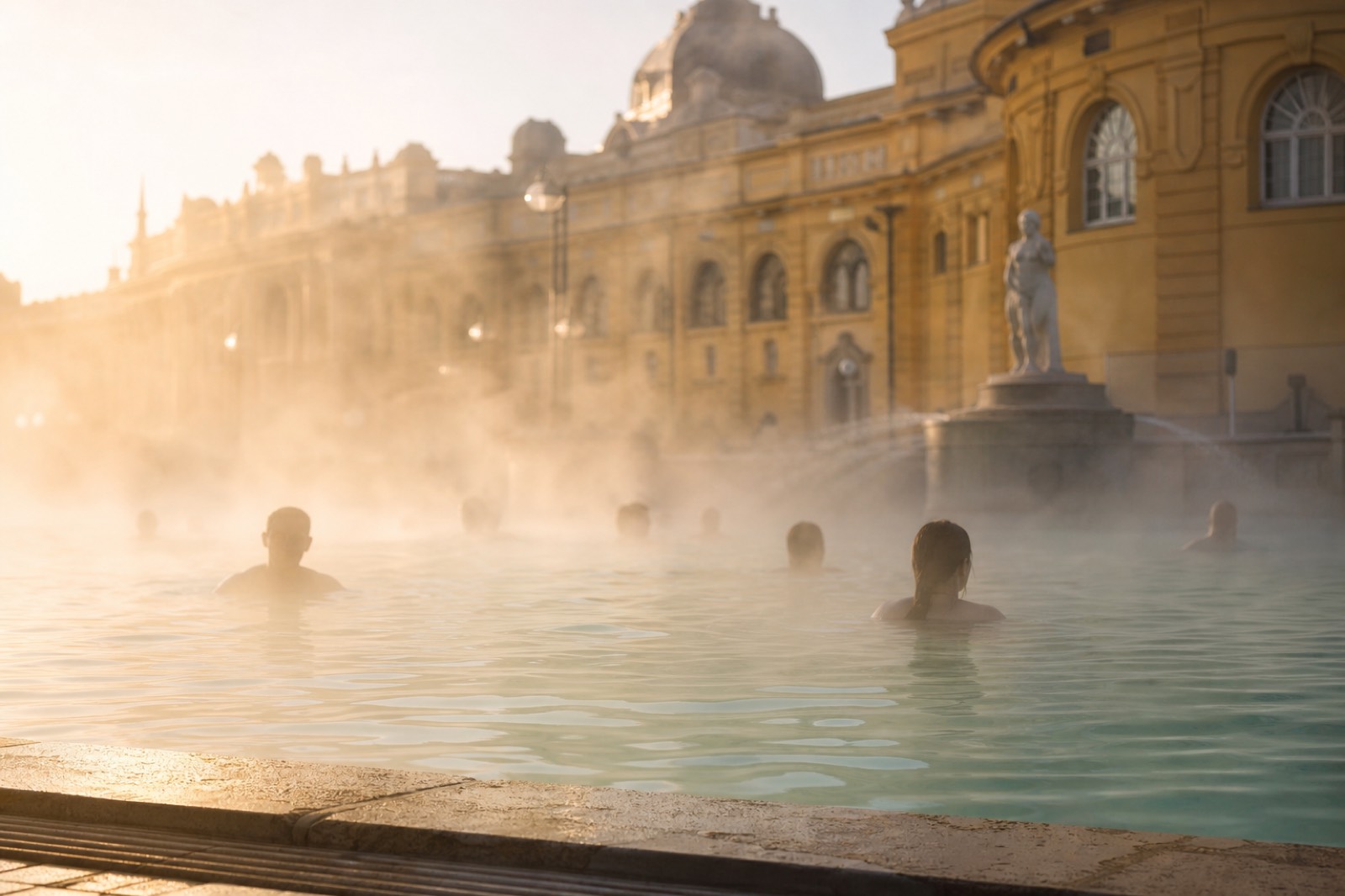
The question usually arrives at the edge of the outdoor thermal pool, right when the steam hits. A guest looks down at water the colour of pale jade, watches a stranger's shoulders sink into it, and asks me quietly, is this actually clean? I have stood in that spot at Széchenyi more times than I can count since I started walking visitors through Budapest's baths in 2022, and I take the question seriously. You are about to share warm water with a few hundred strangers. You should want a real answer, not a shrug.
Are Budapest's thermal baths hygienic?
From what I see as a regular, and from the guest reviews we keep on file, yes: the daytime baths hold a standard most visitors find reassuring. The pools are fed by natural spring water, the operator publishes pool-by-pool temperatures and rules, and not one daytime review in our on-file set raises a hygiene complaint.
Let me be precise about what that answer rests on, because this is a topic where travel writers love to invent things. Budapest sits on more than 100 medicinal geothermal springs, a fact you can check on the city's Wikipedia entry, and the thermal pools are supplied by that spring water rather than by some recirculated municipal mystery. The bath operator publishes exact temperatures for every pool and a recommended soak time. Rules exist and get enforced, mostly by custom and by the famously direct locker-room staff.
What I cannot give you are chlorine readings or refill timetables, because I have not verified them and I refuse to guess. What I can tell you is what a regular observes. Steam rising off pools that are clearly being circulated. Drains working along the pool edges. Cleaning crews moving through the halls when the doors open in the morning, which is a general observation, not a published schedule. And I can tell you what guests report: in the reviews we hold on file for the Széchenyi full-day pass, rated 4.3 across 26,787 GetYourGuide reviews, people complain about pricey lángos and stern locker attendants. Nobody complains about dirty water. If you are nervous anyway, that is normal, and I wrote about exactly that feeling in my piece on first-visit nerves at a Hungarian bath.
Why does the thermal water look green instead of blue?
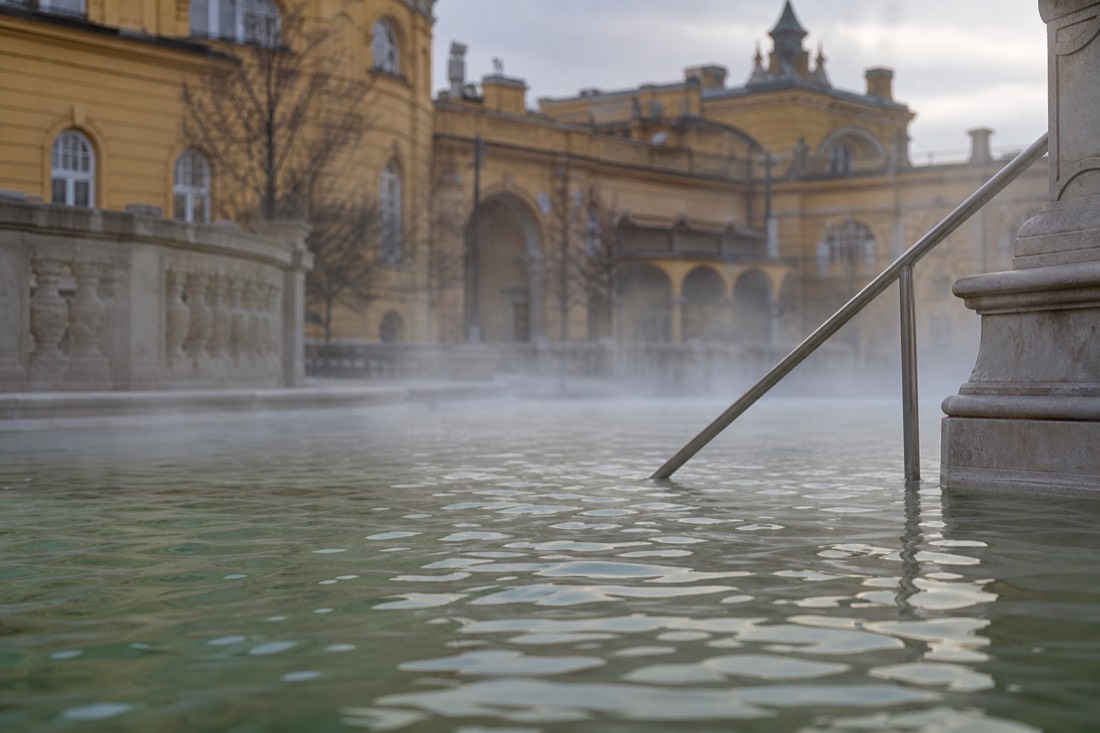
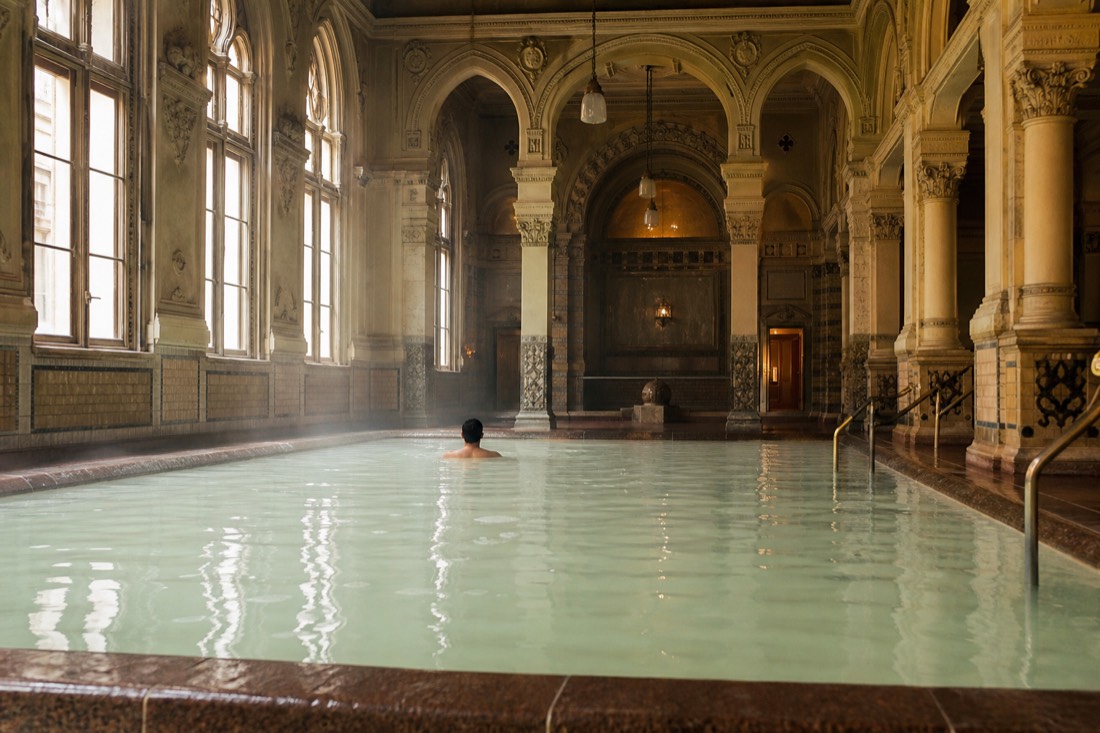
The green-ish tint is mineral content, not dirt. Budapest's thermal water rises from natural springs carrying dissolved minerals, and mineral-rich water simply does not photograph like a chlorinated hotel pool. The official pool listings publish each pool's temperature, and the medicinal pools are the warmest and most mineral-heavy of the set.
This is the single biggest misunderstanding I deal with. Visitors raised on turquoise resort pools see soft green water and read it as neglect. It is the opposite of neglect. The colour is the point. This is water that spent a very long time underground picking up minerals, and it arrives in the pools looking like it. The operator lists what each pool runs at on the official Széchenyi pools page, which is worth a look before you go, because the temperature tells you which pools are thermal and which are for swimming.
| Pool group at Széchenyi | Temperature | Notes |
|---|---|---|
| Outdoor thermal pool | 36-38°C | Depth 1.3-1.4 m, the famous one |
| Outdoor activity and leisure pool | 30-34°C | The playful middle option |
| Outdoor 50 m swimming pool | 26-28°C | Swim cap required for lap swimming |
| Indoor medicinal pools | 28-40°C | Recommended soak around 20 minutes |
Notice the spread. The cool 50 m pool is a sports pool with sports-pool rules. The indoor medicinal pools, the warmest and greenest, come with a recommended soak of roughly 20 minutes, and that recommendation exists for your circulation, not because the water is suspect. When guests ask me whether the deep green indoor pools are the dirty ones, I point out that those are the medicinal pools, the ones the whole 100-year enterprise was built around. If the tint still bothers you, start in the outdoor thermal pool at 36-38°C, where the light is better and the water reads clearer.
What do the official rules ask of you before you soak?
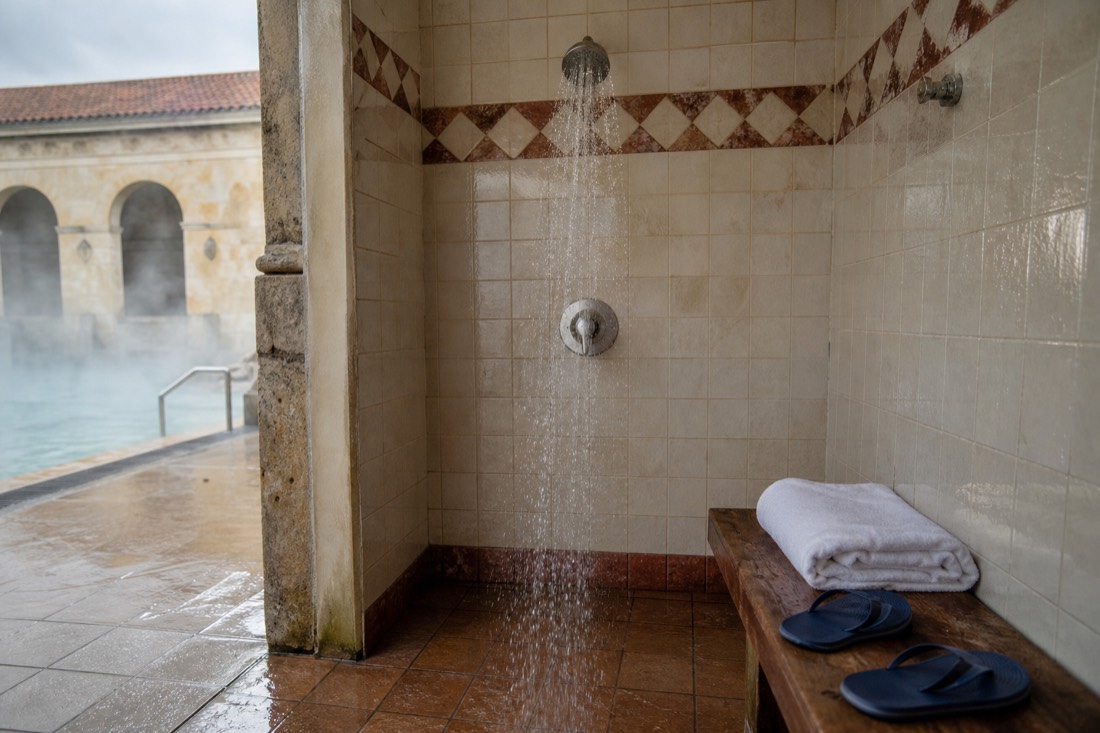
Shower before you enter, with soap, every time. Wear a swim cap if you lap-swim in the 50 m pool. Keep soaks in the hottest medicinal pools to around the recommended 20 minutes. And know that children under 14 are not permitted in the medicinal pools at all, a rule published by the bath company itself.
The shower rule is the backbone of bath hygiene everywhere on earth, and in Budapest it is enforced by custom as much as by signage. Regulars shower properly and they notice who does not. Nobody will drag you back to the showers, but the culture does the policing, and after a few visits you become one of the people doing the quiet noticing. It is the same social mechanism that governs everything else here, from where you hang your towel to how loudly you talk, and I cover the full set in my guide to what to wear and how to behave at the baths.
The under-14 rule surprises families every year. Budapest's bath company states plainly that children under 14 are not permitted in the medicinal water pools, and the Széchenyi day-pass listing carries the matching restriction. That rule is partly about the mineral load and heat being wrong for young bodies, and it has a hygiene side effect I will let you deduce yourself: the medicinal pools are adult water. The swim-cap rule in the lap pool serves the same logic. Hair stays out of the sports pool, small children stay out of the hot mineral pools, and everyone showers first. Simple, old, effective.
When is the bath cleanest and least crowded?
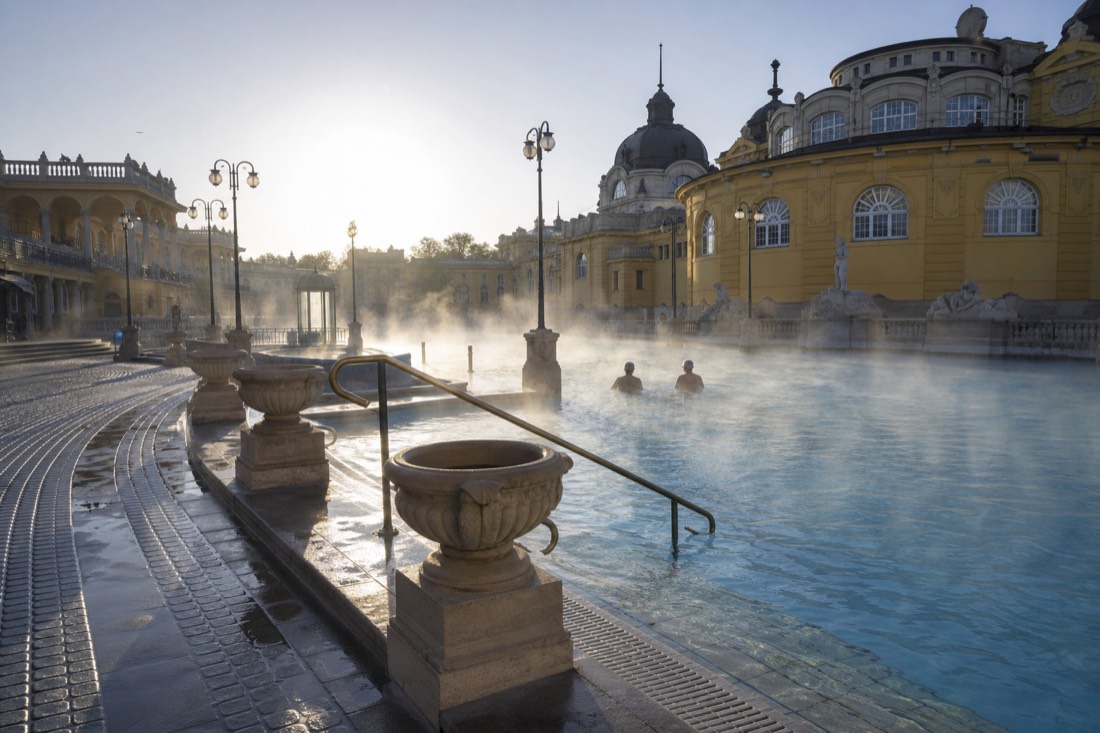
Weekday opening time, 07:00 Monday to Thursday. You walk into a bath that has just been through its overnight reset, share it with pensioners and lap swimmers, and get the calmest water of the week. The crowd peak is the opposite end: Saturday night, when Sparty fills Széchenyi with a party crowd.
Crowds and cleanliness worries travel together. The same water feels pristine at 07:15 with twelve quiet bathers in it and questionable at 15:00 in August with two hundred. So my honest advice is less about chemistry and more about timing, and timing is something we can verify against the official opening hours.
| Time slot | What you get | My read as a regular |
|---|---|---|
| Mon-Thu 07:00-09:00 | Freshly opened bath, regulars only | The calm, confident slot |
| Weekday midday | Building tourist traffic | Fine, busier photo crowds |
| Sat-Sun from 08:00 | Weekend families and groups | Liveliest daytime water |
| Friday 20:00-22:00 | Late close, day crowd draining away | The overlooked quiet window |
| Saturday night | Sparty takes over | A party, not a soak |
Two slots on that table are underused. The Friday evening window exists because Széchenyi stays open until 22:00 on Fridays only, and the last two hours feel like a different, quieter bath. And Saturday night is not really a bath session at all: Sparty runs every Saturday, per the official Sparty site, and it is an 18+ ticketed party with DJs. Wonderful if that is your plan, wrong night for a contemplative soak. If your worry is hygiene, book a weekday morning instead: grab the Széchenyi full-day pass and check live availability and prices on GetYourGuide, then walk in at 07:00 when the doors open. The pass covers the whole day, so an early start costs you nothing extra.
How do you check the hygiene claims you read online?
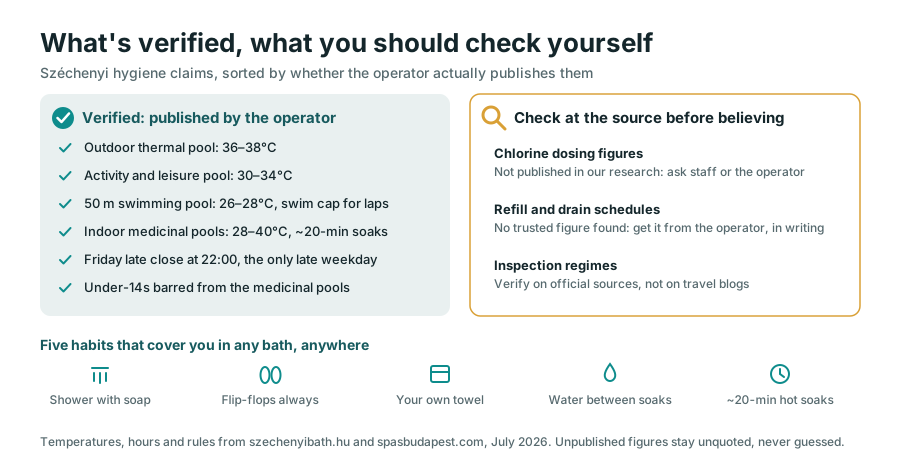
Trust the specifics that come from the operator, treat everything else as unverified. Pool temperatures, soak recommendations, hours and the children's rule are all published officially. Chlorine dosing, drain schedules and inspection regimes are not things I have seen published, so I do not repeat numbers for them, and neither should the articles you read.
I keep a private rule for writing about this city: if I cannot point at the source, the number does not go on the page. Plenty of bath articles fail that test, quoting suspiciously exact water-change intervals with no citation anywhere. Here is how the common claims sort out.
| Claim you will read online | Verified? | Where to check it |
|---|---|---|
| Pool-by-pool temperatures | Yes, published | szechenyibath.hu pools page |
| Recommended ~20-minute soak in hot pools | Yes, published | Official Széchenyi site |
| Opening hours, including Friday's 22:00 close | Yes, published | Official Széchenyi site |
| Under-14s barred from medicinal pools | Yes, published | spasbudapest.com |
| Chlorine levels and dosing figures | Not in our research | Ask staff or the operator directly |
| Refill and drain schedules | Not verified, do not trust exact figures | The operator, in writing |
One small verified window into the cleaning culture comes from the beer spa at Széchenyi's Entrance One, where sessions are private 45-minute soaks. A GetYourGuide reviewer in March wrote that after her session ended she refilled her glass in the waiting area and "watched her empty and clean out the baths", meaning staff drained and cleaned the tub between guests in front of her. That is one tub at one venue, and I will not stretch it into a claim about the big pools. But it matches the general pattern I observe: this is a bath culture that cleans in the open, not one that hides the mops.
Which hygiene habits protect you in any bath, anywhere?
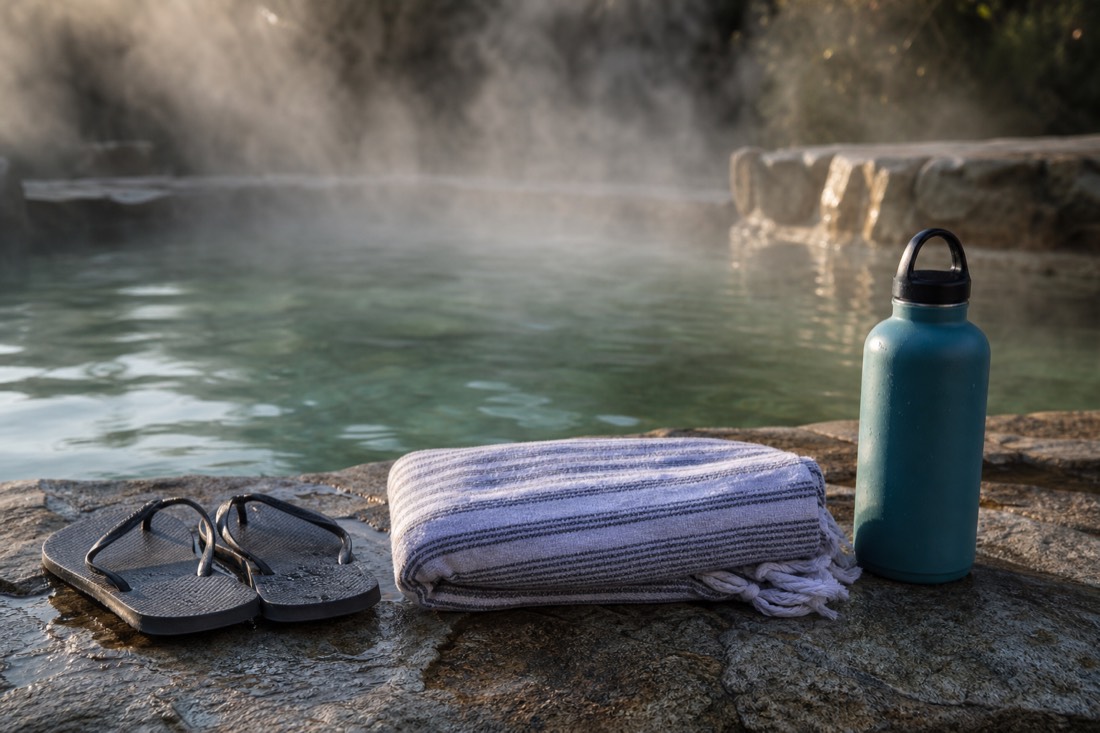
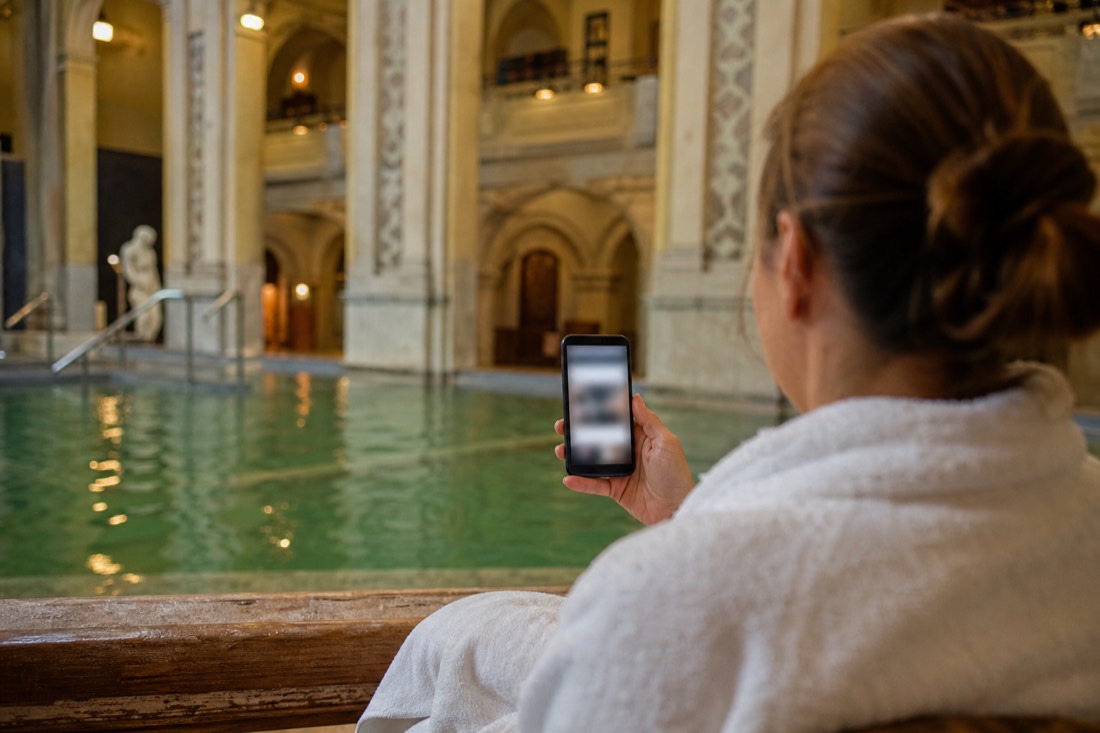
Shower with soap before and after, wear flip-flops from locker to pool edge, bring your own towel, drink water between soaks, and cap your time in the hottest pools at around 20 minutes. Do those five things and you have covered the risks that actually matter in any thermal bath on earth.
Notice that none of those habits depend on trusting anyone's chlorine numbers. They work in Budapest, in Iceland, in a Japanese onsen. Flip-flops matter more than people think, because the wet floors between the locker rooms and the pools are where feet pick up trouble, not the mineral water itself. Guests in our on-file reviews keep repeating the same packing advice, sliders and your own towel, and they are right. The hydration point is underrated too. A 36-38°C pool pulls fluid out of you pleasantly and steadily, and most of the light-headedness people blame on "the water" is plain dehydration wearing a swimsuit.
The 20-minute guideline deserves respect rather than fear. It is the operator's own recommendation for the medicinal pools, and treating it as a rhythm, soak, cool off, drink, repeat, is what turns a two-hour visit into a comfortable full day. My honest bottom line after hundreds of visits: the hygiene question is reasonable to ask and comfortable to answer. Come on a weekday morning, do the five habits, and the worry dissolves somewhere in your first ten minutes of steam. Whether the whole ritual justifies a day of your Budapest trip is a fair follow-up question, and I argue it properly in is a Budapest bath day worth it. More practical questions are collected on our FAQ page. Short version: yes, and go early.