Why Does Budapest Sit on 100+ Thermal Springs (and 2,000 Years of Bathing)?
The geology under the city, the Romans and Ottomans who built on it, and the baths where you can still soak in all of it.
 Written with Gábor Kovács, Budapest thermal bath specialist and spa experience guide
Short answer
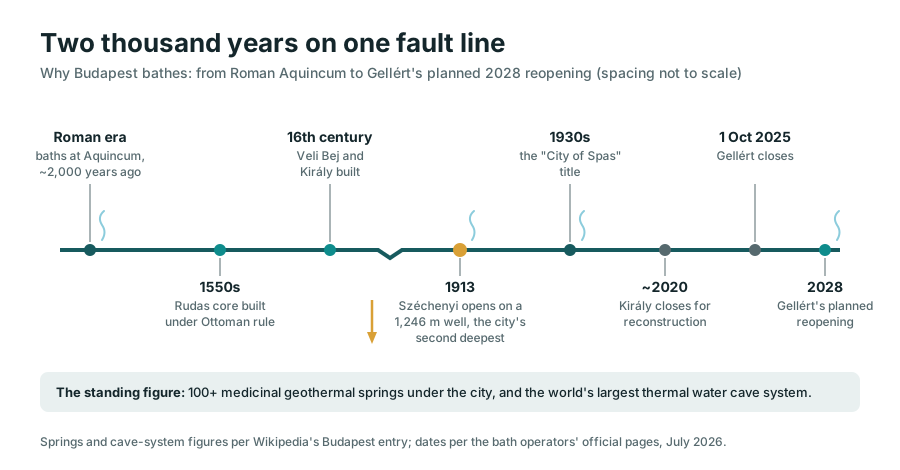
Budapest sits on more than 100 medicinal geothermal springs, plus the largest thermal water cave system in the world, and hot water has been rising here since before the city had a name. Romans bathed at Aquincum, the Ottomans built domed baths in the 16th century, and Széchenyi's 1913 palace still runs on water from a well 1,246 metres deep.
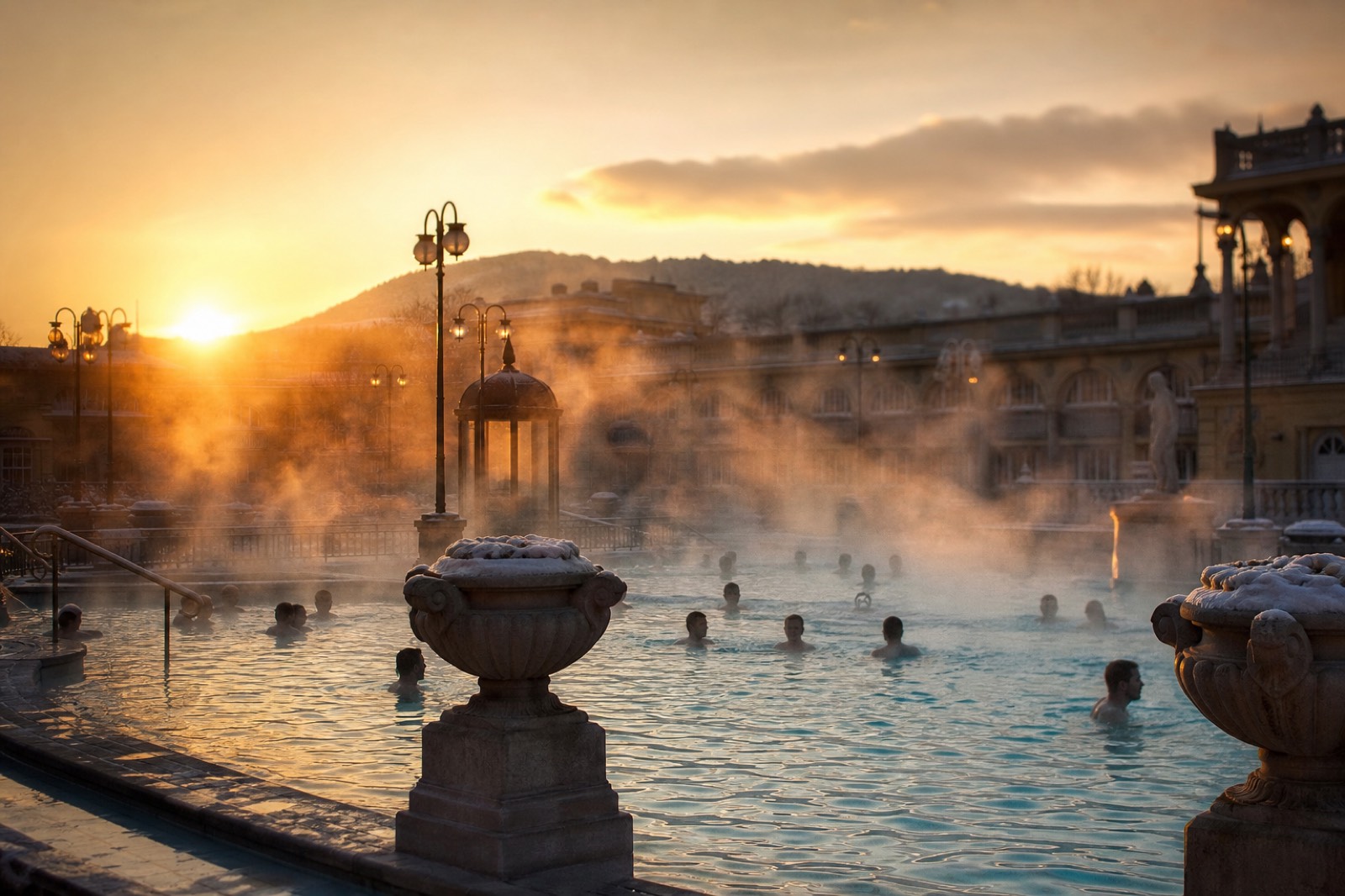
The first time I brought a guest to Széchenyi on a freezing January morning, she stopped dead at the courtyard entrance and just watched the steam roll off the water. You could not see the far side of the pool. I have walked people through that door hundreds of times since 2022 and the reaction never changes, because the sight makes no sense until you know what is underneath the city. This page is the story of what is underneath: the springs, the Romans, the Ottomans, and the 1913 palace where you can still feel all of it on your skin.
Why does Budapest have so many thermal springs?
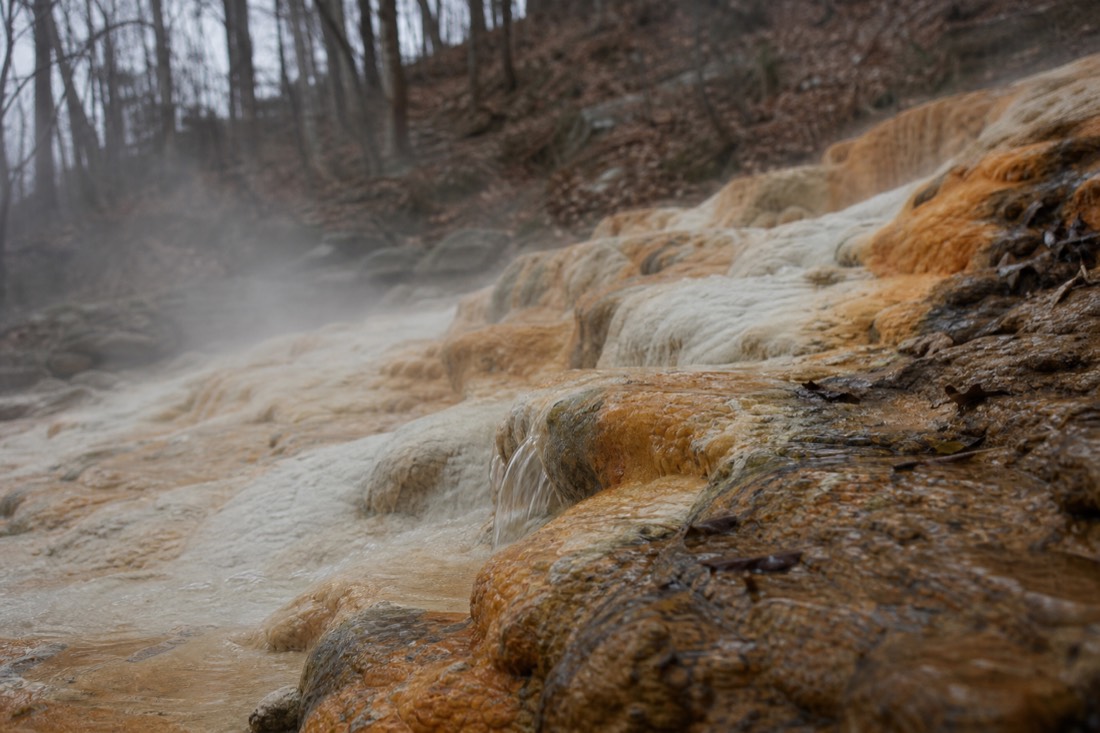
Budapest sits on more than 100 medicinal geothermal springs and the largest thermal water cave system in the world. The explanation usually given is geological: the city straddles a fault line on the Buda side, and heated water finds its way up along that fracture to surface level. That count is not a tourism slogan. It is the standard encyclopedic figure for the city itself, and it is the reason no other capital has anything like this bath culture.
I am a guide, not a geologist, so I will keep the science honest and simple. The commonly given explanation is that the boundary where the Buda hills drop to the flat Pest plain is a zone of faults, and water that has sunk deep enough to heat up rises back along those cracks. Stand on the Buda embankment and the logic is visible: nearly every historic bath, Rudas, Veli Bej, the closed Király and Gellért, hugs that hillside line. What I will not do is quote you litres per day or exact spring temperatures, because the numbers thrown around online vary wildly and I have never seen them properly sourced.
The result of all that plumbing is legal, not just physical. Hungary formally classifies this water as medicinal, which is why the pools at the big baths are called medicinal pools and why doctors here have prescribed soaking for generations. If you want to know what the water is actually claimed to do, and where the evidence is thin, I wrote up the honest version in the guide to what thermal water does for your body.
Who bathed here first?
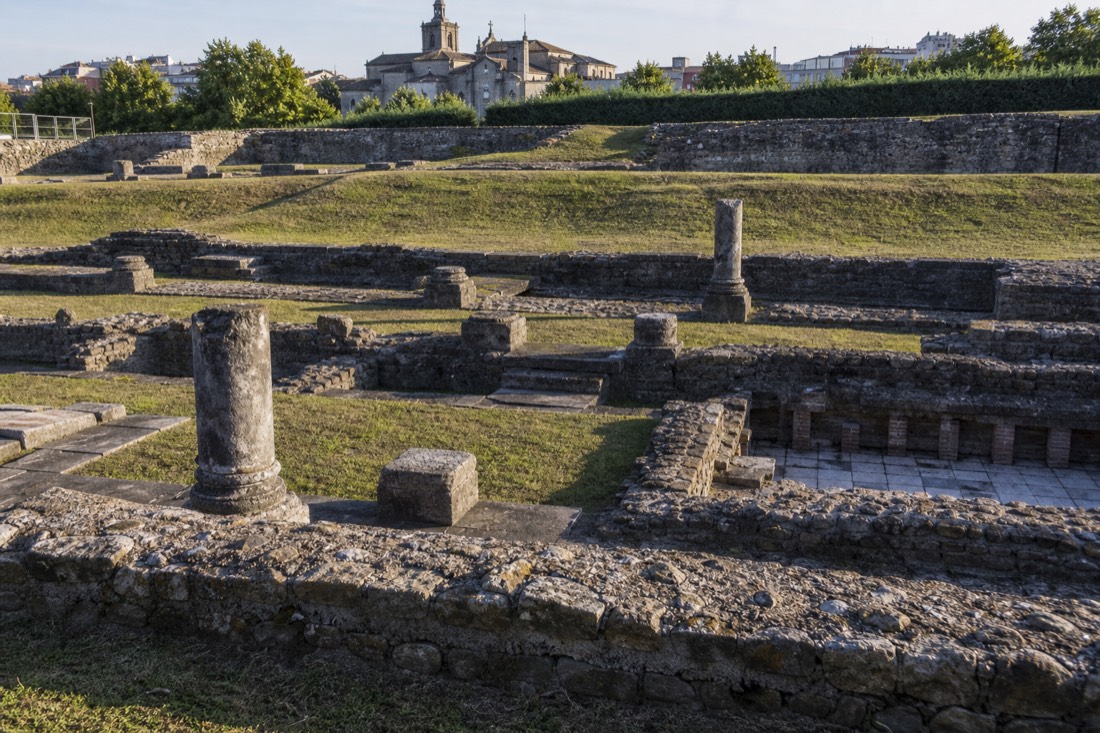
The Romans did, roughly 2,000 years ago. Their town of Aquincum, in the north of today's Buda side, grew up around the springs, and bath ruins from that settlement survive as an archaeological site. Budapest's bathing habit is not a modern spa trend; it predates Hungary itself. This is history in reporting voice, not something I can claim to have witnessed, but the outline is straightforward and well established.
Aquincum was a significant Roman settlement, and like Romans everywhere they built baths as a matter of course. The difference here is that they did not need to engineer their hot water. It came out of the ground already warm, which made this stretch of the Danube an obvious place to settle. You can visit the Aquincum ruins today in Óbuda and see the bones of bath buildings that worked on the same basic idea as the pools you will soak in later that afternoon.
What I find genuinely moving, and what I tell guests on the walk in, is the continuity. Bathing here never really stopped. The peoples changed, the empires changed, the architecture changed completely, but somebody has been sitting in hot Buda-side water more or less continuously since the first century. Very few travel experiences let you join a 2,000-year-old routine for the price of a day ticket.
The Roman chapter left ruins. The next chapter left working baths, and that is where the story gets practical for your trip.
What did the Ottomans build?
In the 16th century, Ottoman rulers built domed Turkish baths over the Buda springs, and two of them still operate: Rudas, whose core dates to the 1550s, and Veli Bej. A third, Király, has been closed for reconstruction since around 2020 with no announced reopening date. These are not reconstructions or themed spas. You bathe inside the original stone.
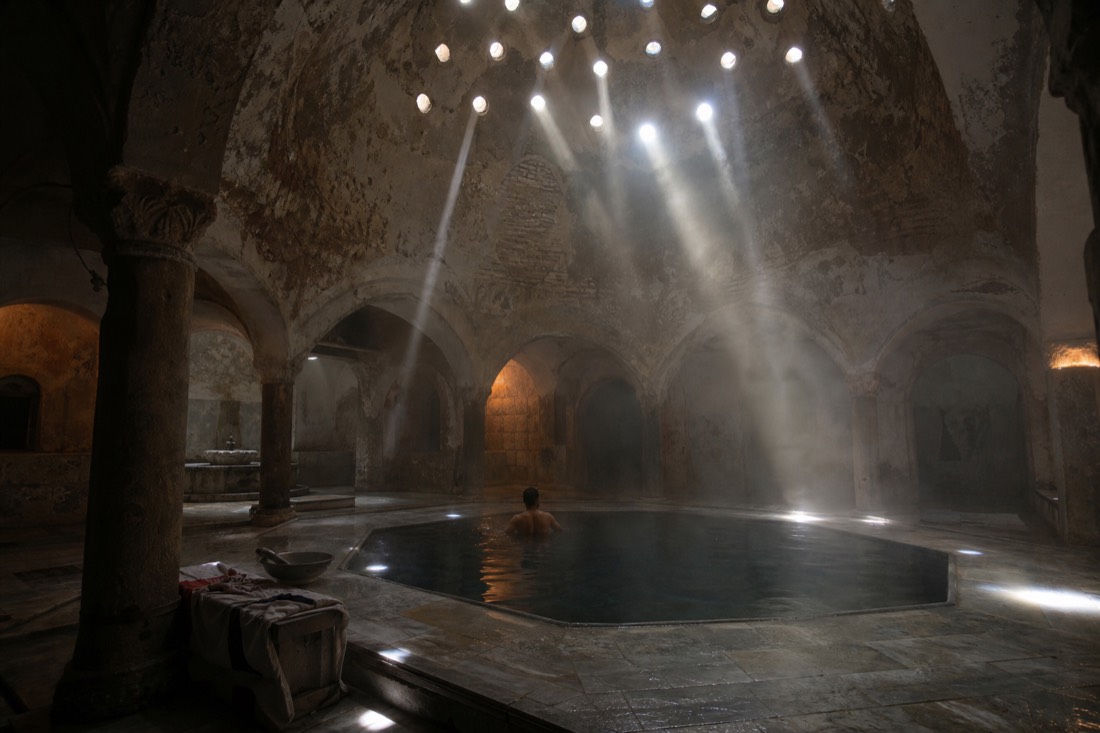
Rudas is the one most visitors see. Under its central dome, pierced with small coloured-glass openings, the octagonal pool has been in use since Ottoman rule. It keeps old customs alive too: the Turkish section runs single-sex on most weekday mornings, women-only all day Tuesday, and co-ed with swimsuits from 11:00, with night bathing on Friday and Saturday until 03:00. The exact schedule is on the official Rudas hours page and it genuinely trips people up, so check it before you go. Veli Bej, run by the Hospitaller Order, is the quiet connoisseur's choice: sessions capped at three hours, tickets sold at the door only, no online sales at all.
Here is the access picture in one grid:
| Ottoman bath | Built | How you get in | The catch |
|---|---|---|---|
| Rudas | Core from the 1550s | Online or door; GYG day pass with 3-course meal exists | Single-sex mornings in the Turkish section; check the day's rules |
| Veli Bej | 16th century, Ottoman era | Door sale ONLY, no online tickets | 3-hour session limit; closed 12:00-15:00 daily; maintenance closure 13-31 Aug 2026 |
| Király | 16th century | You do not, for now | Closed since around 2020, no announced reopening |
If the domes, the half-light and the etiquette questions pull at you, the full breakdown of how these houses differ from the grand 1900s palaces is in my guide to Budapest's Turkish baths.
How did the golden age of 1913 happen?
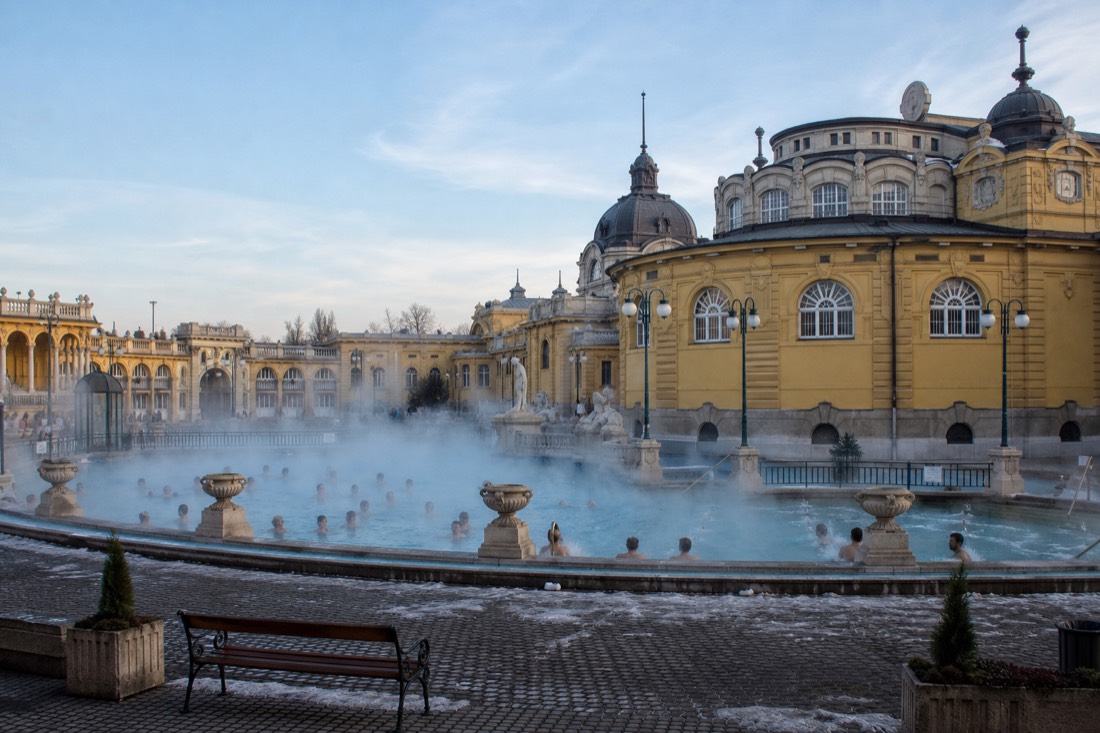
By the late 1800s, engineers had learned to drill for thermal water instead of waiting for it to surface, and the city built grand bath palaces on the results. Széchenyi opened in 1913 on the Pest side, fed by a well 1,246 metres deep, the second deepest in the city. That well is the whole trick: Pest has no hillside springs, so the water had to be fetched.
Think about what that number means. The medicinal water you float in at Széchenyi has come up from over a kilometre down, which is why it arrives properly hot and mineral-heavy, and why a neo-baroque palace could be planted in City Park far from the Buda fault line. The depth figure is from Budapest's official visitor site, not bath legend, and it is my favourite single fact to hand guests as we walk in, because the building above ground finally matches the effort below it.
The pools that 1913 ambition built are still running to plainly published temperatures:
| Széchenyi pool | Temperature | Notes |
|---|---|---|
| Outdoor thermal pool | 36-38°C | Depth 1.3-1.4 m; the postcard pool |
| Outdoor activity pool | 30-34°C | The playful middle option |
| Outdoor 50 m swimming pool | 26-28°C | Swim cap required for laps |
| Indoor medicinal pools | 28-40°C | About 20 minutes per soak is the house guidance |
Those figures are from the official Széchenyi site, and the range matters: a century-old bath still lets you pick your temperature like a menu. Within about two decades of Széchenyi opening, in the 1930s, the city was carrying its "City of Spas" title. What an ordinary day inside the palace actually feels like, hour by hour, is a story I have told in full in a full day at Széchenyi.
Where can you feel this history today?
Three spring-fed landmarks carry the story now: Széchenyi for the 1913 golden age, Rudas and Veli Bej for the Ottoman centuries. Gellért, the other famous palace, is closed until 2028, so plan around it. For a first visit, Széchenyi is the one that shows you the most in a single day. Aquincum adds the Roman prologue if you have a spare morning.
Here is how the living monuments compare right now:
| Bath | Era it represents | Status | Google rating |
|---|---|---|---|
| Széchenyi | 1913 golden age | Open daily | 4.2 across ~66,000 reviews |
| Rudas | Ottoman 1550s | Open, night bathing Fri-Sat to 03:00 | 4.3 across ~12,000 |
| Veli Bej | Ottoman 16th century | Open, door tickets only | 4.5 across ~3,400 |
| Gellért | Art Nouveau palace era | Closed since Oct 2025, planned reopening 2028 | Not currently visitable |
| Király | Ottoman 16th century | Closed since around 2020 | Not currently visitable |
My honest recommendation for a first-timer has not changed in four years of walking people in: start at Széchenyi. It is the fullest expression of what the springs became, and the logistics are the easiest to get right. Book the Széchenyi full-day pass and check live availability and prices on GetYourGuide, and you are quite literally soaking in the result of everything this page describes: the fault line, the drilling, the 1,246-metre well. It runs 4.3 across 26,787 GetYourGuide reviews, cancels free up to 24 hours out, and note that under-14s are not admitted to the medicinal pools. If you are torn between the historic houses, my side-by-side bath comparison does the choosing with you.
What does "City of Spas" actually mean?
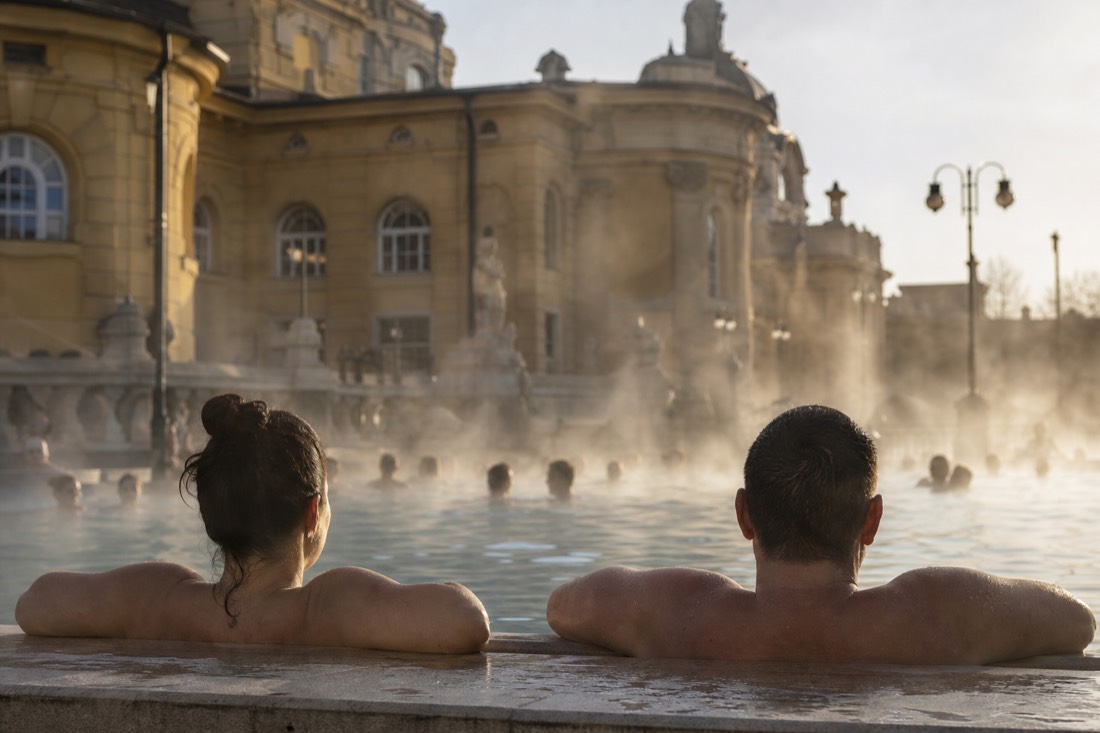
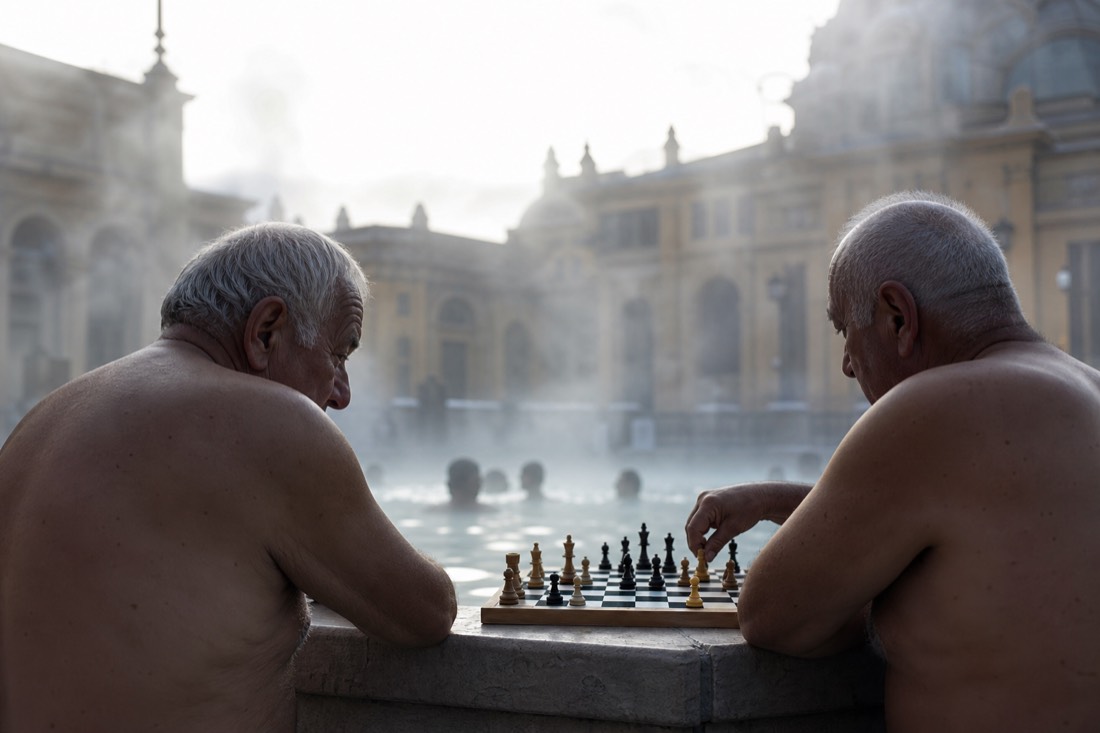
It is a title Budapest has carried since the 1930s, and it describes a working reality, not a slogan: over 100 medicinal springs feeding baths that are part of daily life. People here soak the way other cities take coffee, and the culture keeps evolving rather than fossilising. The pensioners playing chess in 38-degree water are not performing for you.
That is the part guests underestimate. They expect a museum with water in it and instead find a living habit. Morning lap swimmers, doctors' referrals, chess players, tourists, all in the same pools. The title has kept earning itself in odd new ways too: on Saturday nights Széchenyi turns into Sparty, an 18+ late-night party in the thermal water, which the Ottoman bathers could not have imagined but would probably recognise as the same instinct. A city this proud of its water keeps finding excuses to get in it. Hungary's tourism board leans on the same idea, billing the whole country as the land of thermal waters.
So when someone asks me why Budapest has thermal baths, the short version I give at the courtyard door is this: the ground gave the city hot water, the Romans proved the idea, the Ottomans gave it architecture, 1913 gave it a palace, and Budapesters never once stopped getting in. All you have to do is join them.
How do you tour every era of the springs in one trip?
Give it two days and four half-days. A morning at the Aquincum ruins for the Roman prologue, an Ottoman soak at Rudas or Veli Bej, a full palace day at Széchenyi for 1913, and one look at the "City of Spas" habit in a neighbourhood bath. Gellért and Király are closed, so they are viewed from the pavement, not entered.
Guests often ask me to rank the eras. I refuse, because they are not competing; they are chapters, and the pleasure is reading them in order. What I do instead is lay the trip out as half-days, each pinned to one era, with an honest time allowance so nobody tries to cram the Romans, the Ottomans and a palace into one exhausting Tuesday. The allowances below are mine, built from four years of walking people between these doors, and not anything the sites publish.
| Half-day | Era you are standing in | Where | What you actually do | Allow |
|---|---|---|---|---|
| Day 1, morning | Roman, roughly 2,000 years ago | Aquincum ruins, Óbuda | Walk the bath foundations; nothing to soak in | Two to three hours including travel |
| Day 1, afternoon | Ottoman, 16th century | Rudas (bookable) or Veli Bej (door only, 3-hour cap) | Soak under the original dome | Three hours in the water, plus travel |
| Day 2, all day | 1913 palace era | Széchenyi, City Park | The full circuit: outdoor thermal pool, indoor medicinal pools, the 50 m pool | A whole day; the pass is a full-day pass for a reason |
| Day 2, evening or a spare hour | 1930s "City of Spas" habit | Any neighbourhood bath, or the Széchenyi chess corner | Watch locals use the water as daily life | An hour of sitting still |
| Viewed only | Palace era, closed | Gellért facade | Look, photograph, move on; closed to 2028 | Fifteen minutes |
| Viewed only | Ottoman, closed | Király exterior | Same; closed since around 2020 | Fifteen minutes |
The order matters more than people expect. Do the ruins first, when there is nothing to compare them to, and they read as impressive; do them after Széchenyi and they read as a car park with history. The Ottoman soak on day one, then the palace on day two, lets the contrast land: small dark dome, then bright yellow courtyard, and the pools feel like different centuries because they are. If Veli Bej is your Ottoman pick, remember it closes from 12:00 to 15:00 daily and sells only at the door; the Veli Bej guide has the arrive-by logic. If Rudas, its single-sex Turkish-section mornings are covered in the Rudas guide. And for the neighbourhood-bath half-day, the local baths guide lists Dandár, Paskál and the Palatinus strand with their official sites.
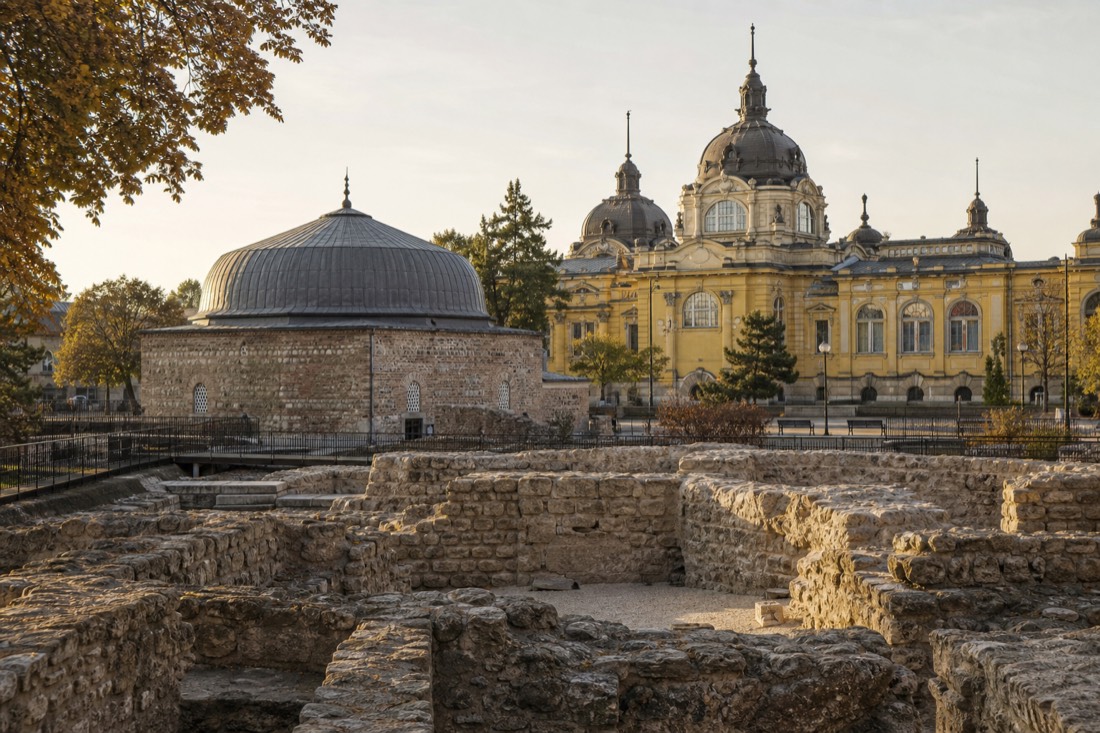
How does a 1,246-metre well become a 38-degree pool?
Széchenyi's medicinal water rises from a well 1,246 metres deep, the city's second deepest, and arrives at the surface hot. The bath then serves that water across a menu of pools: 36-38°C in the outdoor thermal pool, 30-34°C in the outdoor activity pool, 26-28°C in the 50-metre swimming pool, and 28-40°C across the indoor medicinal pools.
This is the section where I have to be strict with myself. I can tell you the depth, because the city's own visitor site prints it, and I can tell you the pool temperatures, because Széchenyi publishes them. What I cannot tell you is how the engineers get from one number to the other: how much cooling, mixing or resting happens between the wellhead and your shoulders. I have never seen that verified anywhere I trust, and the numbers people repeat online contradict each other. So here is the honest ladder, from the bottom of the well to the pool you choose, with the facts on file and my own advice kept clearly separate.
| Stage | Temperature on file | What it means for you |
|---|---|---|
| The well, 1,246 m down | Not published; the water arrives hot at the surface | This is why a palace could be built on flat Pest, far from the Buda hillside springs |
| Indoor medicinal pools | 28-40°C | The hottest water in the building; the house guidance is about 20 minutes per soak |
| Outdoor thermal pool | 36-38°C, depth 1.3-1.4 m | The postcard pool, standing depth, where the winter steam comes from |
| Outdoor activity pool | 30-34°C | Warm enough to linger, cool enough to move; my choice for a long conversation |
| Outdoor 50 m swimming pool | 26-28°C | Lap water; swim cap required for laps |
Read down the middle column and the bath turns into a thermostat you walk through. My standing routine for guests is to start warm rather than hot, an activity-pool soak while the body adjusts, then the outdoor thermal pool, then a short indoor medicinal soak with the 20-minute guidance respected, then back out to cool water. Nobody camps in the 40-degree end, and the ones who try are the ones who feel wobbly at the lockers. If your visit is in the cold months, the winter baths guide explains why the 36-38°C outdoor pool is the whole show, and Széchenyi in the snow is what that looks like from inside the steam. What the water is claimed to do for the body, and where the evidence thins out, is the subject of the thermal water benefits guide; I keep medical opinions out of my own mouth.
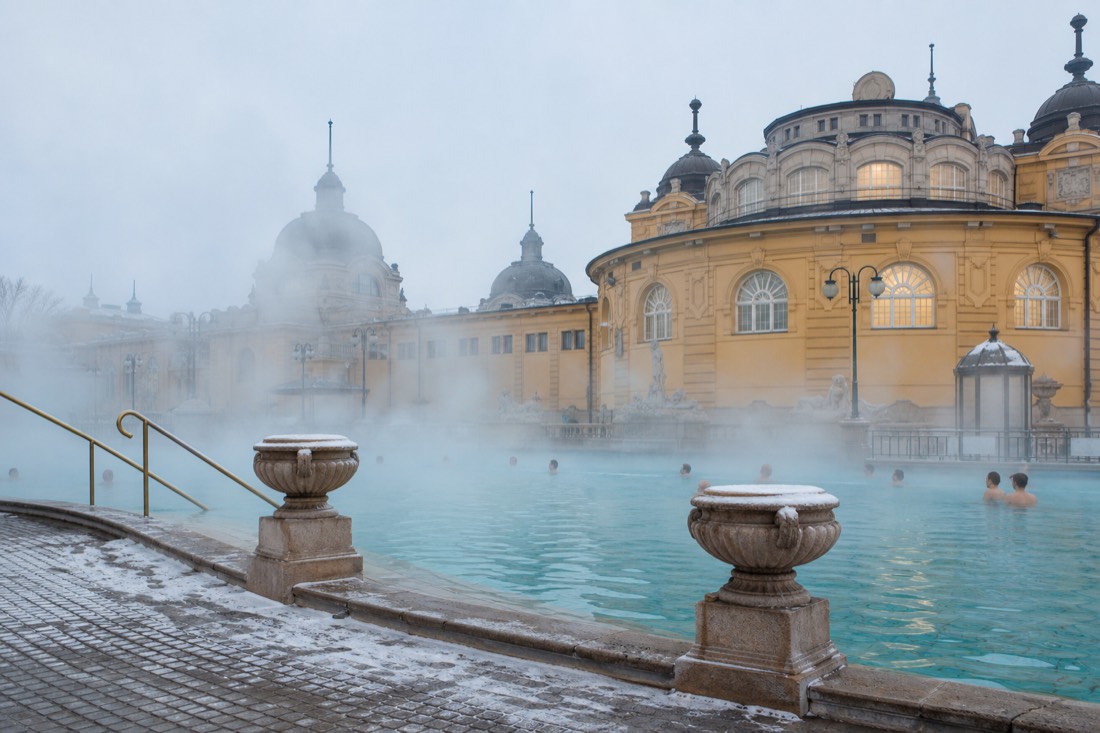
Which spring facts are verified, and which are just repeated?
Verified: 100+ medicinal springs, the largest thermal water cave system, Széchenyi's 1913 opening and its 1,246-metre well, Rudas's 1550s core, and the current closures. Reported but not independently checked by me: Roman Aquincum details and the exact "City of Spas" year. Not verified anywhere I trust: mineral element lists, litres per day, and cure claims.
The internet has been copying the same Budapest spring paragraph for twenty years, and some of it is solid while some of it is folklore with a footnote. Since this site earns its keep by being the page that does not repeat things it cannot back, here is my ledger. It is the list I check before I say anything with a number in it, and it is also, quietly, the list of things I wish other guides would stop asserting.
| Claim you will read | Status | What I say instead |
|---|---|---|
| Budapest sits on 100+ medicinal geothermal springs | Verified, encyclopedic | Use it freely |
| The city has the largest thermal water cave system | Verified, encyclopedic | Use it freely |
| Széchenyi opened in 1913 | Verified | Use it freely |
| Széchenyi's water rises from a 1,246 m well, the city's second deepest | Verified, official visitor site | My favourite fact at the courtyard door |
| Rudas's core dates to the 1550s | Verified | Use it freely |
| Gellért closed 1 October 2025, reopening planned 2028 | Verified, official | Never present Gellért as bookable |
| Király closed around 2020, no reopening date | Reported by current coverage | Say "reported", never "reopens soon" |
| Romans bathed at Aquincum | Reported, encyclopedic | Fine in reporting voice; I was not there |
| The "City of Spas" title dates to 1934 | Reported | I say "the 1930s title" |
| "The water contains X, Y and Z minerals" | Not verified by us | Point to the bath's own pages; I print no element lists |
| "Millions of litres a day rise under the city" | Not verified by us | Skip it; the figures online disagree with each other |
| "The water cures arthritis / skin / joints" | Medical claim, not ours to make | Legally medicinal in Hungary; ask your doctor for the rest |
| "Széchenyi is the biggest medicinal bath in Europe" | Commonly repeated, not verified by us | I call it the flagship and leave the superlative alone |
The pattern is obvious once you see it: the dated, checkable facts hold up, and the vague superlatives are where the folklore lives. If a page gives you a mineral list without a source or a litres-per-day figure to three significant places, treat the rest of it with the same care. The one closure row that changes month to month is Veli Bej's, and the open-status rundown is where I keep that current.
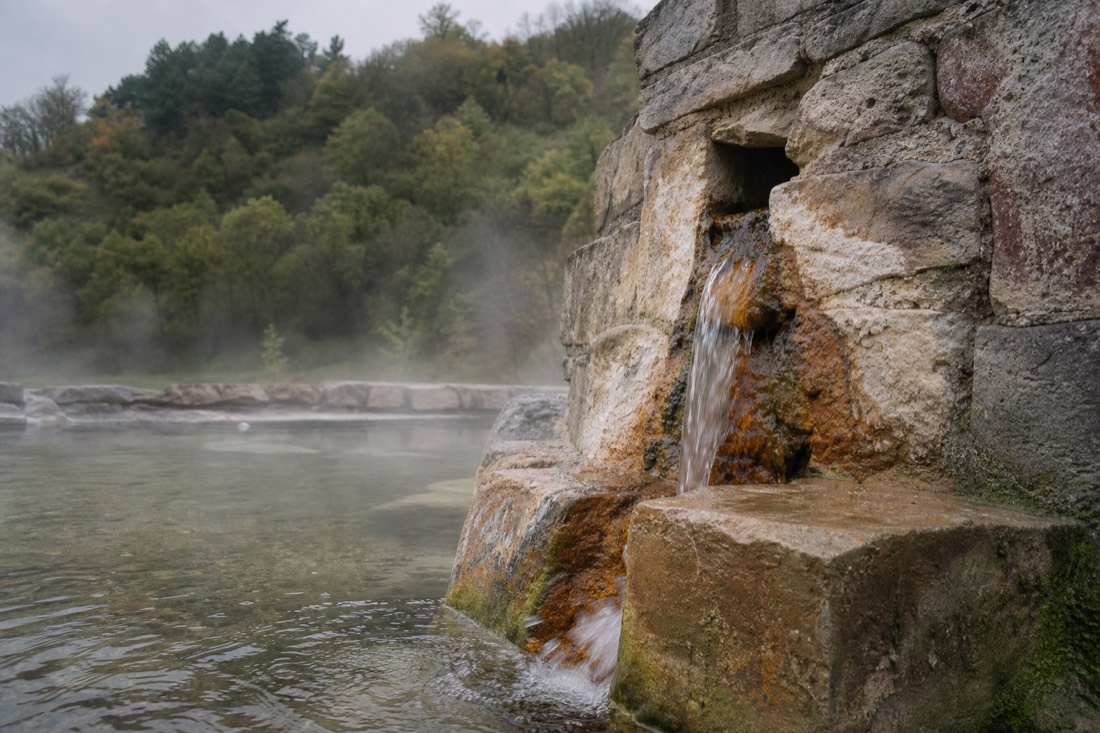
How does Gábor explain the springs to guests?
In one breath at the courtyard door: the ground gives the city hot water, the Romans proved the idea, the Ottomans gave it a roof, 1913 gave it a palace, and locals never stopped getting in. Then I stop, because I am a guide and not a geologist, and I let the steam do the rest of the explaining.
I have said some version of that sentence to more than a thousand people since 2022, by my own count, and I have learned which follow-up questions come next and which honest answers satisfy them. The trick is not knowing more; it is knowing where my knowledge stops. Guests trust a guide who says "that figure is unverified, here is the one that is" far more than one who recites a mineral list. Below is the standing set of questions I get on the walk in, and the answers I give, with the page on this site that carries the long version.
| What guests ask at the door | What I say | Where the long version lives |
|---|---|---|
| "Why is it steaming like that?" | The medicinal water in the outdoor thermal pool sits at 36-38°C, and on a cold morning the air cannot keep up | Winter baths guide |
| "Where does the water come from?" | A well 1,246 metres deep, the second deepest in the city; Pest has no hillside springs, so they drilled | This page, above |
| "Is it really medicinal?" | Legally, yes, in Hungary; what it does for your body is a question for your doctor, not for me | Thermal water benefits |
| "Which is the oldest one I can get into?" | Rudas, with a 1550s core; Veli Bej is Ottoman too, door tickets only | Turkish baths guide |
| "Can we do Gellért tomorrow?" | No; closed since October 2025, planned back in 2028 | Open-status rundown |
| "How long should we stay?" | Széchenyi is a full day; the hottest indoor pools about 20 minutes at a stretch | A full day at Széchenyi |
| "Is there something less serious?" | Yes: the 45-minute beer spa at Entrance One, and Sparty on Saturday nights, 18+ | Beer spa, Sparty |
What I do not do is improvise. If someone asks about the fault line, I give the commonly stated explanation and label it as such. If someone asks what the water contains, I say the bath's own pages are the place to look, and that I do not carry element lists in my head because I have never seen a version I could stand behind. That restraint has become part of the tour. People come to Budapest expecting spa marketing and get, instead, a local who tells them which numbers are real. Then they get in the water, and the argument is over. Two thousand years of bathers on this fault line were not persuaded by statistics either.
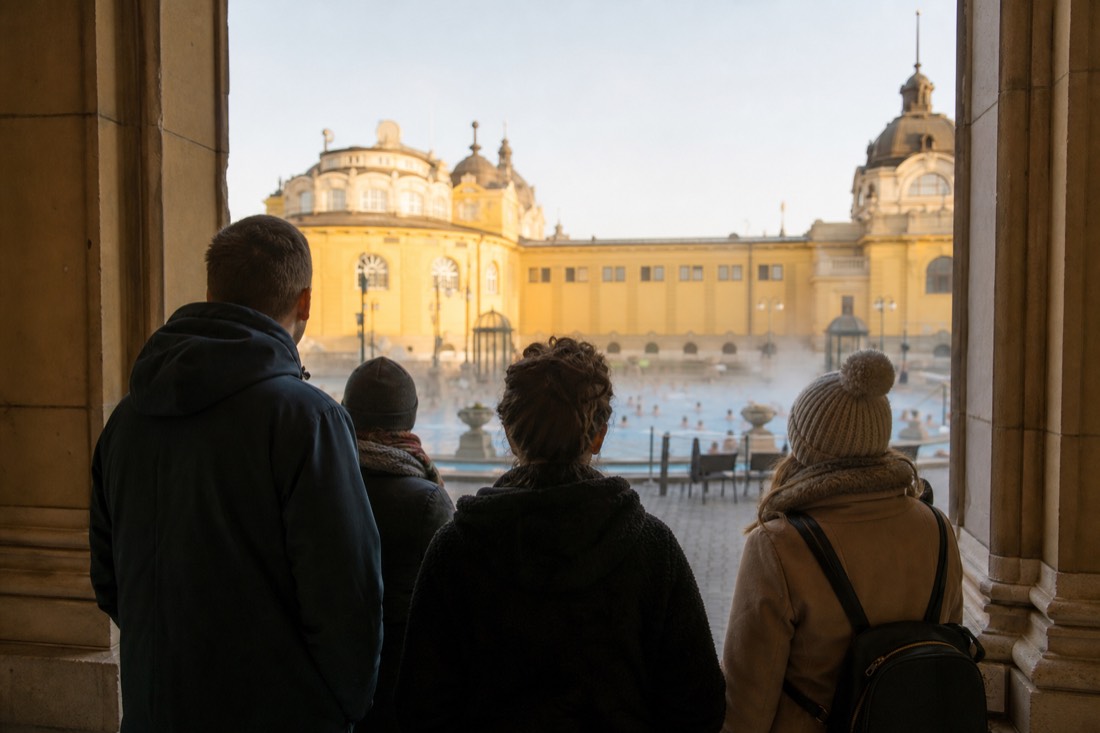
Why does Budapest have so many thermal baths?
The city sits on more than 100 medicinal geothermal springs, along with the largest thermal water cave system in the world. The commonly given explanation is a fault line on the Buda side that lets deep-heated water rise to the surface, and 2,000 years of settlers built baths on top of it.
Are there still Roman baths in Budapest?
As ruins, yes. The Roman town of Aquincum in today's Óbuda grew up around the springs, and its bath remains survive as an archaeological site. No Roman bath still operates, but Rudas and Veli Bej, built under the Ottomans in the 16th century, are working baths you can visit.
Which Ottoman-era baths can you still bathe in?
Two: Rudas, whose core dates to the 1550s, and Veli Bej, which sells tickets at the door only and caps sessions at three hours. Király, the third Ottoman survivor, has been closed for reconstruction since around 2020 with no announced reopening date.
When did Széchenyi open and where does its water come from?
Széchenyi opened in 1913 in City Park on the Pest side. Its medicinal water rises from a well 1,246 metres deep, the second deepest in Budapest, which is how a bath palace could be built away from the natural Buda-side springs.
Is Gellért Baths open right now?
No. Gellért has been closed since 1 October 2025 for renovation, with reopening planned for 2028. If a guide or listing still sells it as a current option, it is out of date. Széchenyi, Rudas and Veli Bej are the open historic choices.
What does the "City of Spas" title mean?
It is a title Budapest has carried since the 1930s, reflecting its unusual concentration of medicinal springs and working baths. It describes daily life, not marketing: locals genuinely use the thermal pools year-round, from morning swims to prescribed soaks.