Gellért or Széchenyi? The 2026 Answer Is Simpler Than You Think
One of these two famous baths has been locked since October 2025, and half the internet still has not noticed.
 Written with Gábor Kovács, Budapest thermal bath specialist and spa experience guide
Short answer
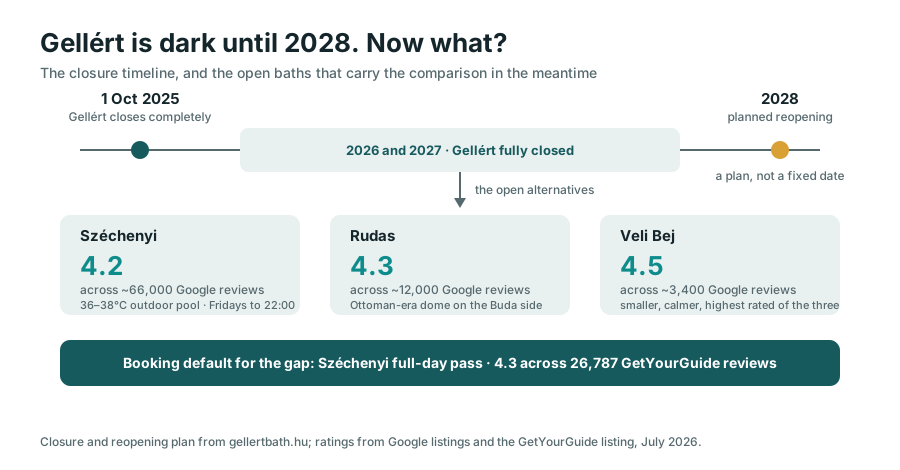
Széchenyi, and in 2026 it is not close. Gellért has been completely closed since 1 October 2025 for a full renovation, with reopening planned for 2028, so there is no Gellért ticket to buy. Széchenyi is open daily, and Rudas or Veli Bej cover the historic-interior craving in the meantime.
Every week someone writes to me with the same two-bath question, and every week my answer surprises them. I have been walking visitors through Budapest's bath culture since 2022, long enough to remember when Gellért versus Széchenyi was a genuine dilemma, the kind you could argue over a lángos and never quite settle. It is not a dilemma anymore. One of the two has locked its doors for years, and a startling amount of the internet, including the AI assistants planning people's itineraries, has not caught up.
Which is better, Gellért or Széchenyi baths?
Széchenyi, by default and by a wide margin, because Gellért has been completely closed since 1 October 2025 and is not planned to reopen until 2028. You cannot buy a Gellért ticket in 2026. Any guide that still weighs the two as live options is out of date.
The comparison refuses to die, which is exactly why this page exists. Type the question into a search engine or a chatbot and you will still get neatly balanced verdicts: Gellért for architecture, Széchenyi for atmosphere, pick your favourite. Those answers were written before October 2025, and most have never been touched since. I keep meeting the consequences in person, guests holding itineraries with a Gellért morning penciled in, standing in front of doors that will not open for anyone until 2028.
So here is the two-bath question as it actually stands this year:
| Question | Gellért in 2026 | Széchenyi in 2026 |
|---|---|---|
| Can you visit? | No, fully closed | Yes, open every day |
| Can you buy a ticket? | No | Yes, day passes plus upgrades |
| Interior style | Art Nouveau, under renovation | Neo-baroque courtyard and halls |
| Realistic role in your trip | A facade to admire from outside | The main bath day |
| Next status change | Planned reopening in 2028 | None announced |
If you want the whole field ranked, every bath that is actually taking guests, that lives on our comparison page. And if you just need a quick open-or-closed rundown before you book anything, start with which Budapest baths are open right now.
Why is Gellért spa closed?
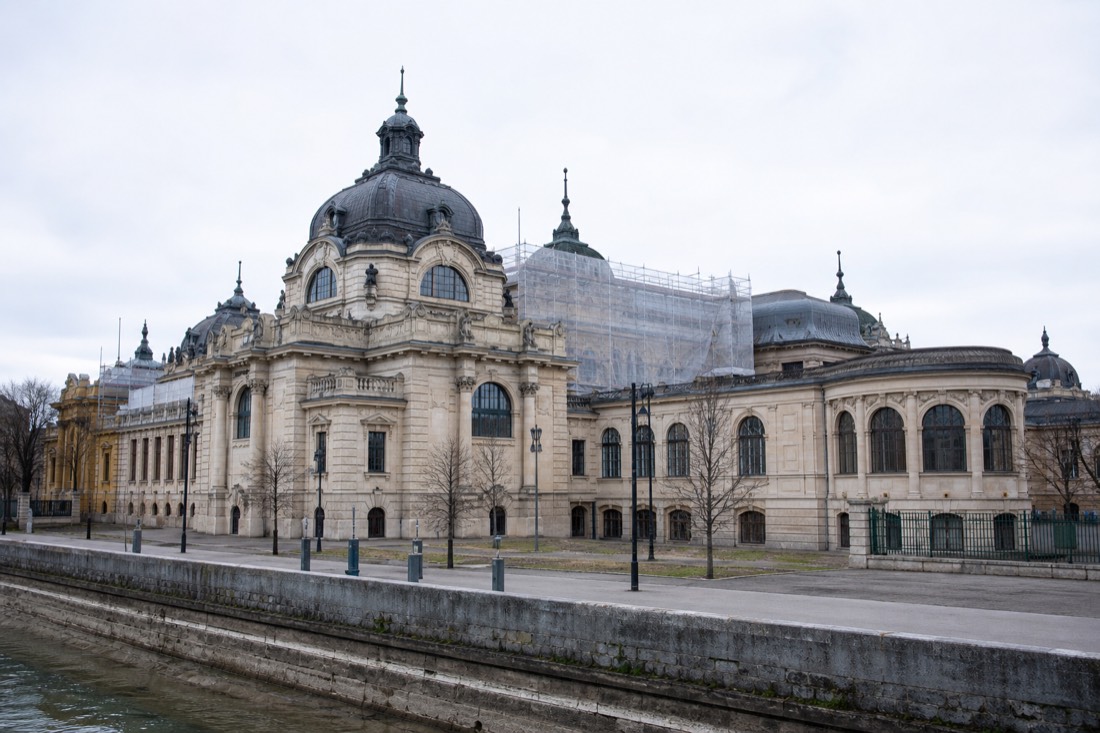
Gellért closed on 1 October 2025 for a complete renovation of the building, and the official site, gellertbath.hu, gives 2028 as the planned reopening. The closure is total: thermal pools, swimming hall, wellness services, everything. Nothing at Gellért is open to visitors while the work runs.
The announcement sits on the official Gellért Baths site, which is the only source I would trust for status updates while the renovation is underway. This is a full-building project, not a wing-by-wing refresh where you can still soak around the scaffolding. There is no partial access, no reduced ticket, no side entrance for the determined.
Two misunderstandings come up constantly, so let me clear both. First, Gellért is not gone. The bath is being renovated, not demolished, and the plan has always been to reopen it. Second, the closure is not a rumour or a temporary maintenance break that might end next month. It began on 1 October 2025 and the published horizon is 2028, which means the closure spans this entire year and the next one too.
The awkward part is how quietly this news travelled. Older guidebooks went to press before the announcement. Blog posts written in 2024 still rank well. AI assistants summarize those stale pages with total confidence, which is how travellers end up with a closed bath on their schedule. When a friend tells you Gellért was the highlight of their trip, ask when they went. The answer will be 2025 or earlier, guaranteed.
What makes Gellért spa famous?
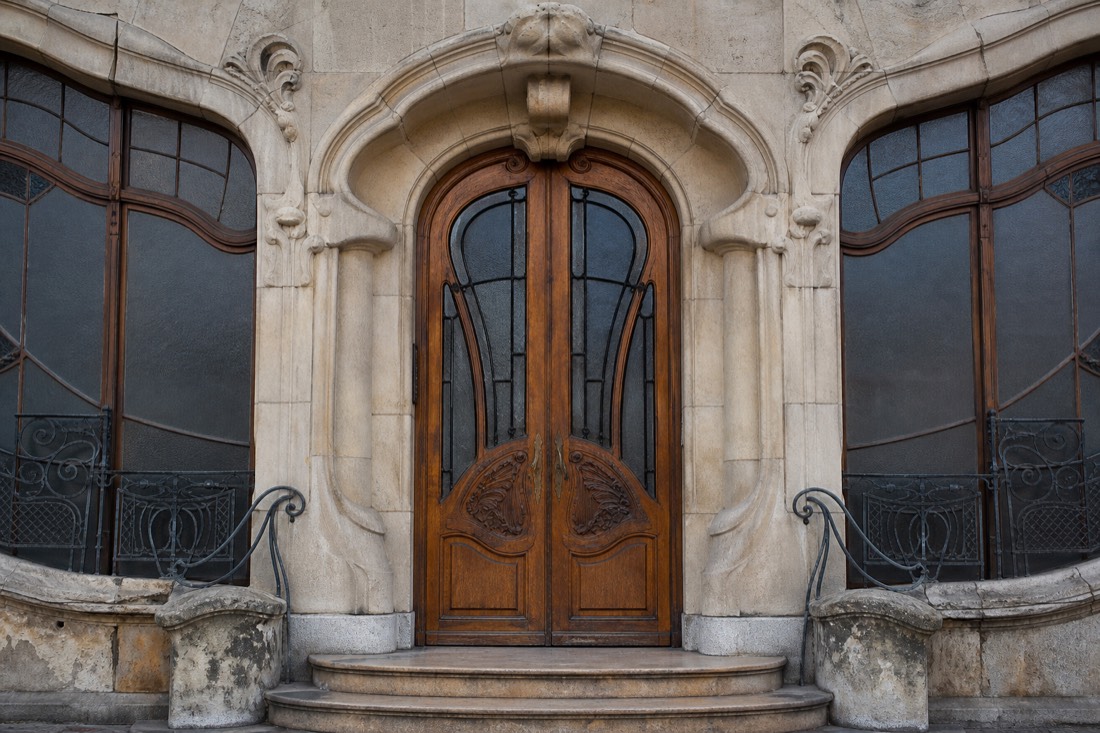
Gellért earned its name on looks: an Art Nouveau bath palace with a columned indoor pool hall, mosaic-covered walls, stained glass overhead, and sculpted stone at every turn. For a century it was Budapest's most photographed bath interior, the image that appeared whenever anyone needed a picture of a grand European spa.
Gellért opened in the early twentieth century as part of a grand hotel development at the foot of Gellért Hill, on the Buda bank of the Danube. Where Széchenyi spreads outward into a vast courtyard, Gellért turned inward. Its centrepiece was the columned main hall, lit from above, ringed by galleries, tiled in colours you do not see in modern buildings. Add the mosaics, the stained glass and the carved details and you had less a swimming facility than a bathhouse dressed as an opera house.
That visual power is why it became shorthand. Film crews used it. Photographers built portfolios in it. Postcards leaned on it for decades. Budapest sits on more than a hundred medicinal springs, a fact you can verify on the city's Wikipedia entry, yet one interior came to represent all of that geology to the outside world, and it was Gellért's.
I will be honest about the other side of the ledger, though, because I heard it from guests for years while both baths were open. Plenty of people walked into Gellért expecting transcendence and came out saying the water itself felt ordinary next to the setting, and that the whole visit ran quieter and shorter than a Széchenyi day. The building was the star. The bathing was good, not supernatural. That distinction matters when you are deciding how sorry to feel about missing it.

How does Széchenyi compare on the things Gellért did best?
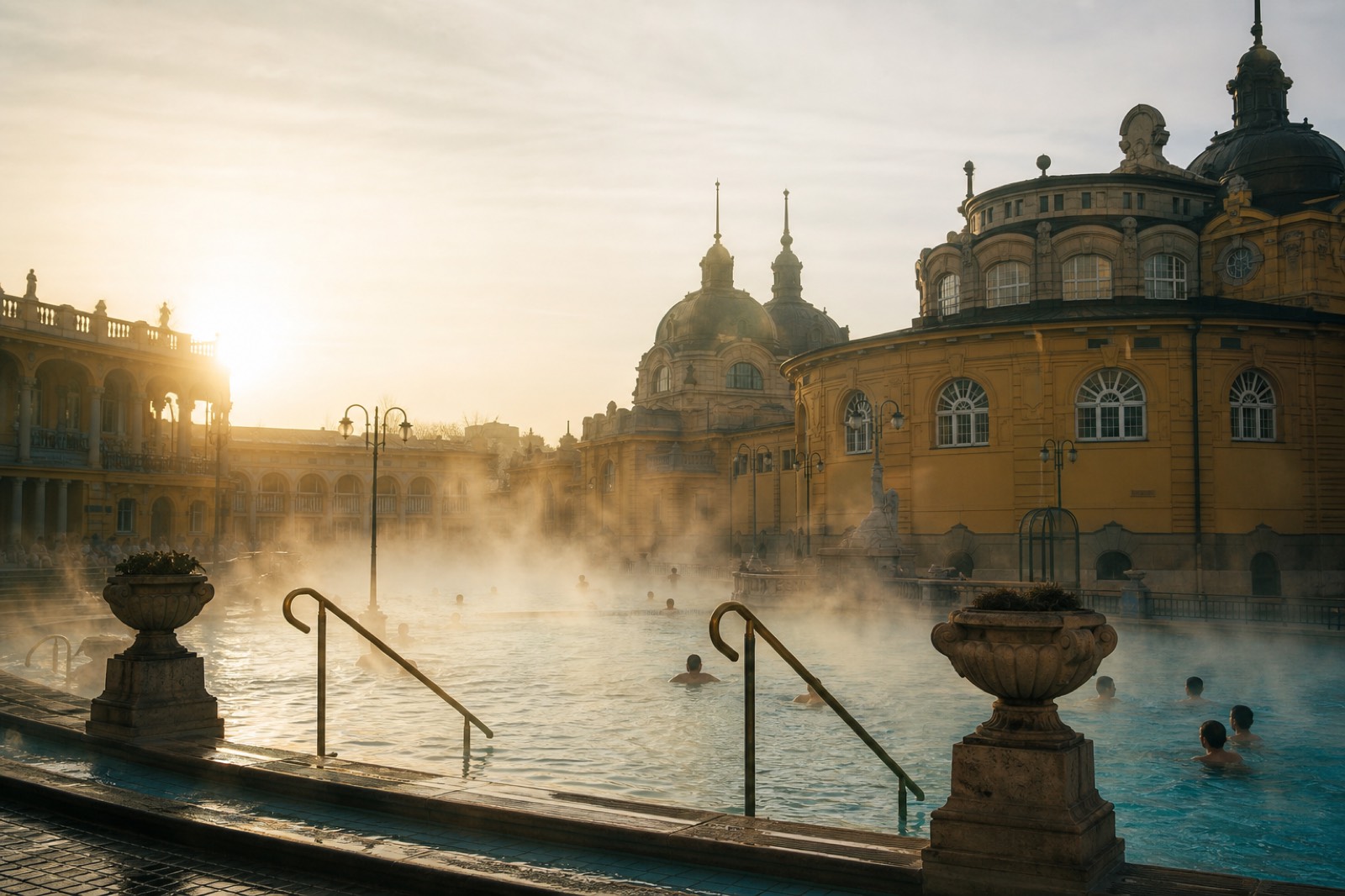
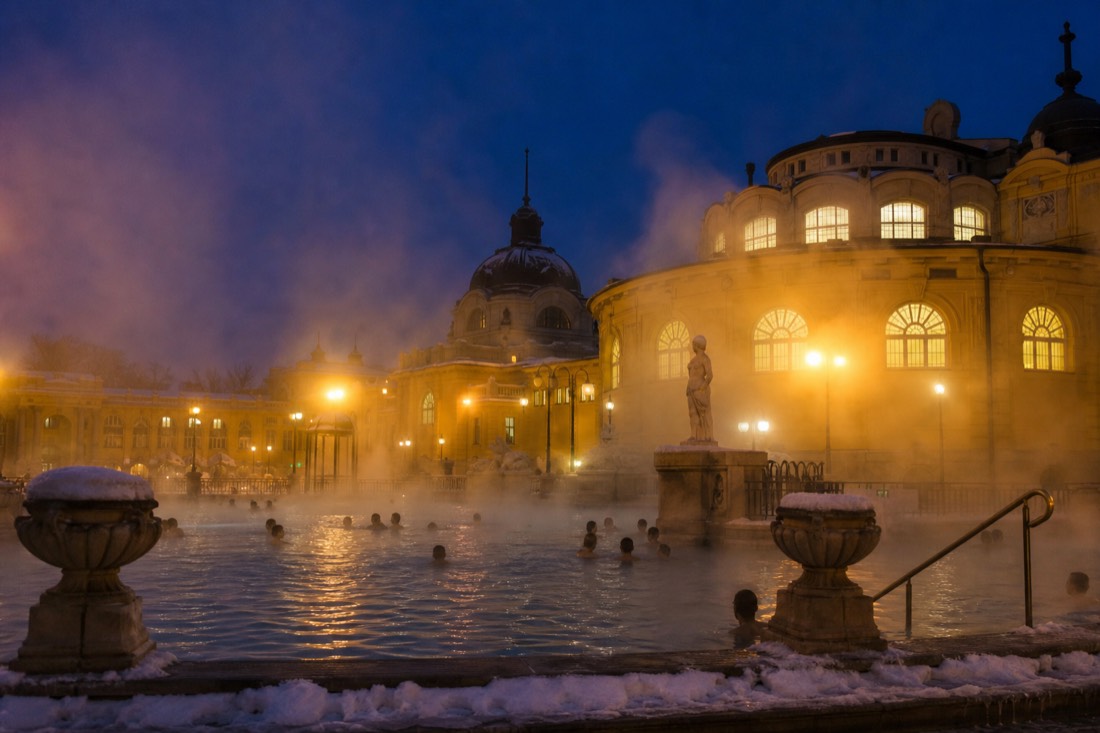
Széchenyi cannot match Gellért's Art Nouveau interior, and it does not try. What it offers instead is scale and outdoor atmosphere: a neo-baroque courtyard with thermal water at 36 to 38°C all year, indoor medicinal pools running 28 to 40°C, and Friday evenings that stretch all the way to 22:00.
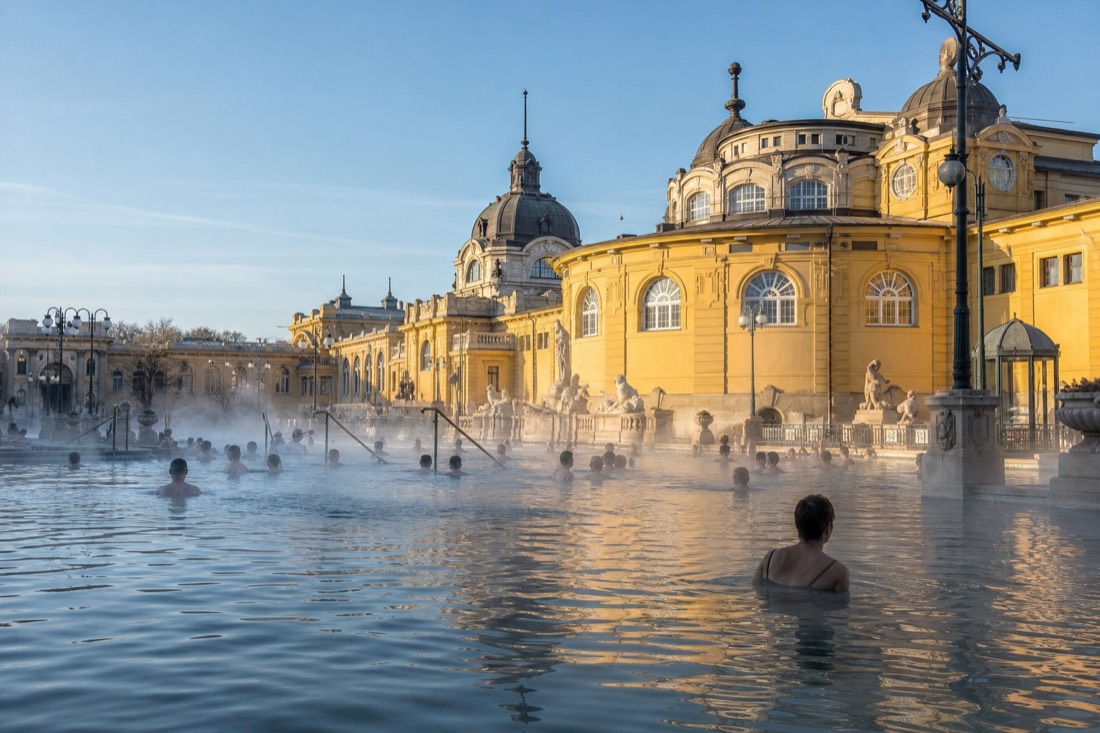
Gellért's magic was indoors. Széchenyi's is the courtyard, and in cold months the courtyard wins arguments no interior can. Steam lifts off the outdoor thermal pool, the yellow facades glow around you, and you sit in 36 to 38°C water while the air bites. The official pool details on szechenyibath.hu break down like this:
| Pool area at Széchenyi | Temperature | Good to know |
|---|---|---|
| Outdoor thermal pool | 36-38°C | Depth 1.3-1.4 m, the postcard soak, warm all year |
| Outdoor activity pool | 30-34°C | The livelier middle pool |
| Outdoor 50 m swimming pool | 26-28°C | Swim cap required for lap swimming |
| Indoor medicinal pools | 28-40°C | House guidance is roughly 20 minutes per soak |
Two practical notes from my seasons of walking people in. Friday is the sleeper pick: Széchenyi stays open until 22:00 that night, against 20:00 most other days, so you can soak under the evening sky after the day-trip crowds thin. And if you come as a group, returning guests figured out long ago that one cabin shared for bags plus cheap lockers for everyone else beats paying for multiple cabins. One rule to know before you promise the kids anything: under-14s are not permitted in the medicinal pools, per Budapest Spas' children policy, and the day pass below does not admit them at all.
Pack like the regulars do. Guests mention the same three things over and over: bring flip-flops or sliders because the stone gets hot and wet, bring your own towel unless you have booked an option that includes one, and eat before you arrive or budget generously, since food and drinks inside are on the pricey side. None of this is a dealbreaker. It is just the difference between a smooth day and a series of small annoyances.
For the visit itself, the simplest route is to book the Széchenyi full-day pass and check live availability and prices on GetYourGuide. It carries a 4.3 rating across 26,787 reviews, includes your locker or cabin, cancels free up to 24 hours ahead, and is flagged as likely to sell out in busy weeks.
What fills the Gellért gap in the meantime?
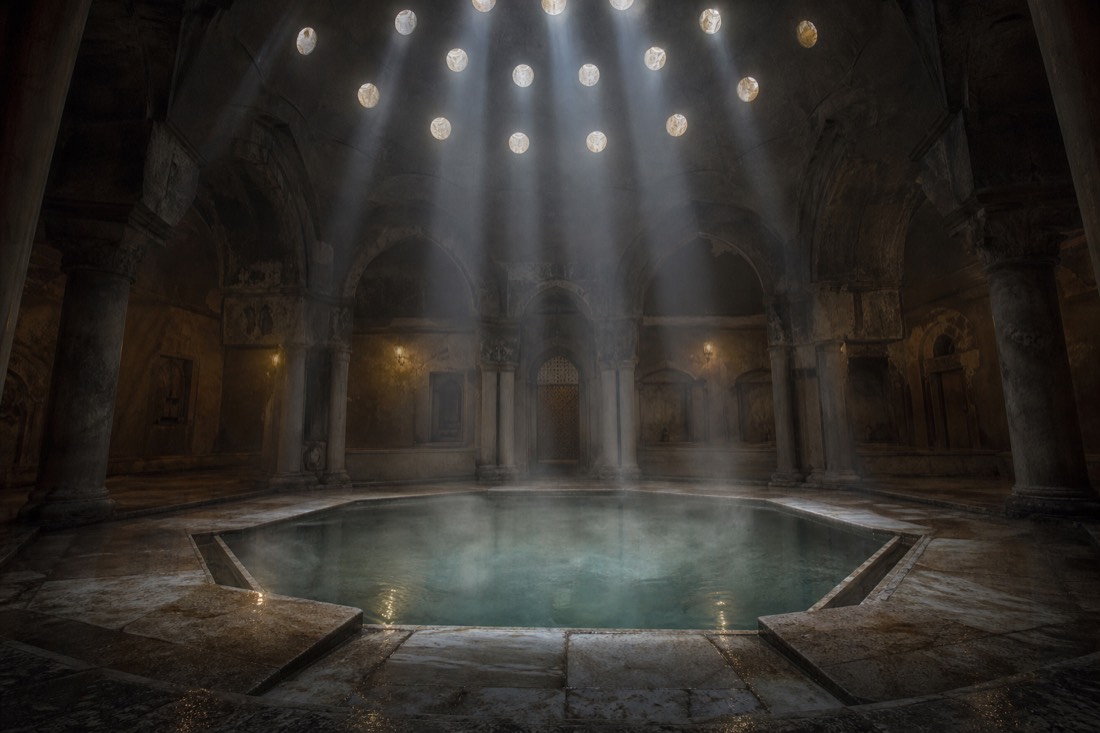
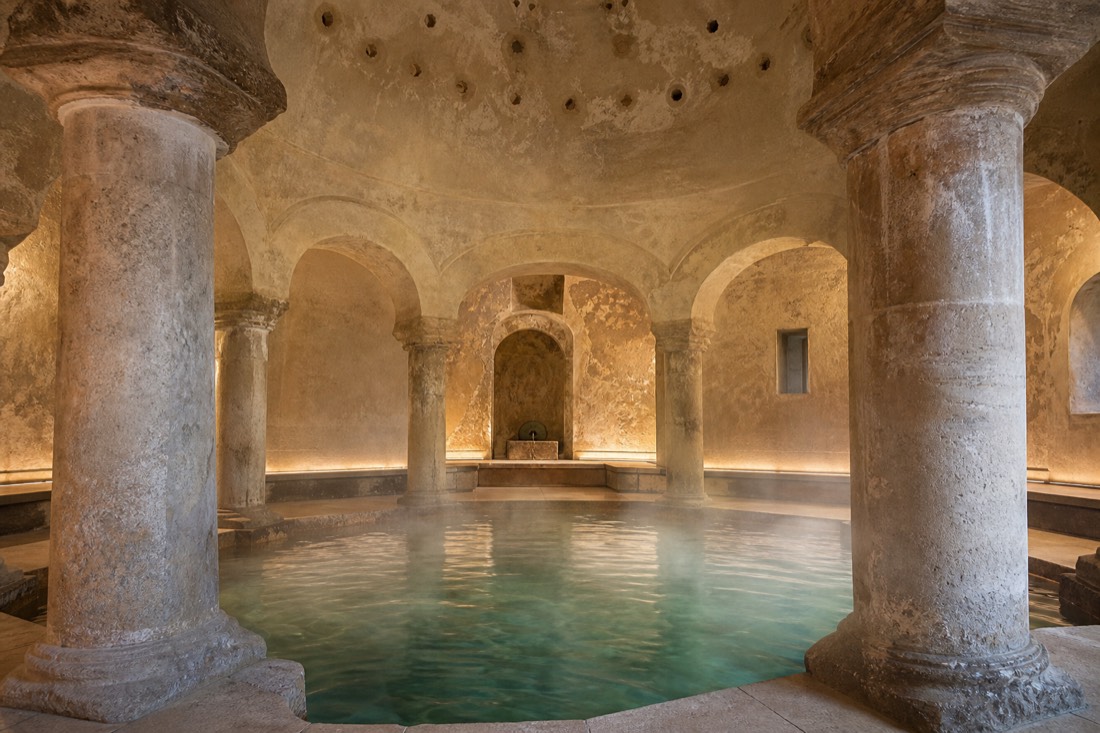
Rudas and Veli Bej cover most of what Gellért offered, and both sit on Gellért's side of the river. Rudas brings Ottoman-era architecture and holds 4.3 across roughly 12,000 Google reviews. Veli Bej is the smaller, calmer restored Ottoman bath at 4.5 across about 3,400. Neither requires the crowds tolerance Széchenyi does.
What people actually mourned when Gellért closed was not one specific pool. It was the feeling of bathing inside history, on the quieter Buda bank, away from the biggest crowds. Both of those things still exist in Budapest.
| Bath | Google rating | Why it fills the gap |
|---|---|---|
| Rudas | 4.3 across ~12,000 reviews | Ottoman-era core on the Buda side, the closest open thing to Gellért's sense of history |
| Veli Bej | 4.5 across ~3,400 reviews | Restored Ottoman bath, smaller and calmer, the highest Google rating of the three |
| Széchenyi | 4.2 across ~66,000 reviews | The outdoor courtyard and sheer scale nothing else in the city matches |
Rudas is the one I point architecture lovers toward first. Its old core is genuinely centuries older than Gellért ever was, stone and dome rather than tile and glass, and it delivers that bathing-inside-history sensation in a different dialect. It is also the one Buda bath you can book ahead like Széchenyi, through the Rudas day pass with a 3-course meal, rated 4.1 across 1,298 GetYourGuide reviews. Veli Bej is the quiet answer, the bath for people who read that Gellért was "less hectic" and chose it mainly for that reason.
None of this replaces a Gellért visit one for one, and pretending otherwise would be silly. It does mean the closure costs your trip less than the headlines suggest. Whether a full bath day deserves its slot in a short Budapest itinerary at all is a fair question, and I answer it properly in is a Budapest bath day worth it.
When does Gellért reopen?
The official line is 2028, published on gellertbath.hu, with no month attached. Large heritage renovations move, so treat the year as a plan rather than a promise. Check the official site before building a 2028 trip around it, and expect Széchenyi to carry Budapest's bath scene until then.
I would love to hand you a reopening date to circle. There is not one, just the year. My practical read: if you are planning travel for 2026 or 2027, plan as if Gellért does not exist, because for your purposes it does not. If you are dreaming about 2028, hold the thought loosely and verify on the official site before you book flights around a bath.
When it does reopen, expect noise. A renovated Gellért returning after years away will be the most talked-about ticket in the city for a while, and I would not be surprised if the early months are the busiest in the building's history. Which, funnily enough, will hand the "quiet historic bath" crown right back to Rudas and Veli Bej.
Three things worth watching as 2028 approaches. First, the official site is the only place a real reopening date will appear, so ignore third-party countdowns. Second, ticketing details will almost certainly be published fresh, so anything you read about old Gellért prices or entry rules belongs to the previous era. Third, if the reopening slips, you will hear it there first too. I will update this page the day any of it changes.
Until 2028, my standing advice stays the same: give Széchenyi the day it deserves rather than mourning the bath you cannot enter. If you want to see exactly how those hours play out, from the 07:00 doors to the last evening soak, I wrote up a full day at Széchenyi hour by hour. Shorter answers to the most common bath questions live on our FAQ.

What did Gellért do best, and what covers each of those things now?
Gellért's strengths were an ornate indoor hall, a quiet Buda-bank setting, a shorter and calmer visit than Széchenyi, and a hotel-spa feel. Each of those has an open stand-in in 2026: Rudas for history under a dome, Veli Bej for calm, Széchenyi for the grand-building sensation, and the beer spa for the private, unhurried hour.
When guests grieve Gellért, I ask them to name the thing they wanted from it. The answer is almost never "the water". It is a feeling, and feelings can be found elsewhere if you break them into parts. So I keep a ladder in my head, one rung per Gellért trait, with the bath that carries that rung today. It is not a like-for-like swap. It is a way to stop treating the closure as a hole in the trip.
| What Gellért was known for | Closest open equivalent in 2026 | Where the match is weakest |
|---|---|---|
| Bathing inside a historic interior | Rudas, Ottoman core from the 1550s | Stone and dome, not tile and stained glass |
| A quieter, less crowded soak | Veli Bej, 4.5 across ~3,400 Google reviews | Sessions are capped at 3 hours, no online tickets |
| Grand-building sense of occasion | Széchenyi's neo-baroque courtyard | Outdoor and busy rather than indoor and hushed |
| Buda-side location, away from Pest crowds | Rudas and Veli Bej, both on the Buda bank | Neither sits at the foot of Gellért Hill itself |
| A shorter, more contained visit | Beer spa's 45-minute private session at Széchenyi | Beer and copper taps, not mineral pools |
| Being photographed as "the" Budapest bath | Széchenyi, the most reviewed bath in the city | Different postcard entirely |
Two rungs deserve a note. The rooftop panorama pool at Rudas, inside its wellness section, gives you a Danube view no Gellért pool ever did, so one rung actually climbs higher than the original. And the beer spa is the odd one out on purpose: people who loved Gellért for its private, contained feel, in and out in an afternoon, often like the 45-minute private tub at Széchenyi far more than they expected, at 4.7 across 58 GetYourGuide reviews. It is a small sample, so I say that plainly. It is also the only Budapest bath experience I know where nobody shares your water.
If Ottoman architecture is the rung that matters most to you, I wrote up the whole family of them in Budapest's Turkish baths, including how the single-sex mornings work.
What should you expect from the Gellért reopening in 2028?
Nobody has published a reopening month, a ticket price, or an entry system for the renovated Gellért, and I will not guess at them. What you can reasonably expect is a fresh set of rules, a first season busier than anything the old building saw, and a period where every pre-2025 tip about the place is wrong.
Let me be careful about the line between reasoning and prediction. The only published fact is the year, 2028, on the official site. Everything below is inference from how large heritage renovations tend to reopen, and I flag it as exactly that. Treat it as a way to think, not a schedule to book against.
| Signal to watch | Where it will appear first | What it tells you |
|---|---|---|
| A specific reopening date | gellertbath.hu, nowhere else first | The year has become a plan with a calendar |
| New ticket types and prices | The official site, then the booking platforms | Every old price you have read is retired |
| Revised entry rules (age, hours, sections) | The official site's visitor pages | Old etiquette posts about Gellért may no longer apply |
| Early booking windows | The booking platforms, GetYourGuide included | Demand will be measured in weeks, not days |
| A slipped date | The official site, usually quietly | Keep the Buda-side plan below as your fallback |
Why do I expect a crush in the first months? Because I have watched what a "likely to sell out" flag does to the Széchenyi day pass on ordinary summer weekends, and that is a bath that never closed. A famous building returning after years away, with every travel outlet running the reopening story at once, will draw more people than its pools can seat. If you want to be there in the opening season, plan the way you would for any hot ticket: watch the official site, book the moment a date is live, and hold a Széchenyi or Rudas day as insurance.
Why do I say old tips will be wrong? Because a full-building renovation usually changes circulation, changing rooms, and which pools sit where. Advice about the "left-hand entrance" or the "quiet upstairs pool" from a 2019 blog belongs to a building that no longer exists in that form. When the doors open, read the new visitor pages before you read anyone's memories, including mine.
One honest caveat closes this section. Large heritage projects slip more often than they run early. If your only Budapest trip is in 2028, do not build the whole itinerary on one bath. Build it on the ones that are open, and let Gellért be a bonus if it lands.
How do you build a Buda-side bath day without Gellért?
Pair Veli Bej and Rudas, both on Gellért's bank of the river. Take Veli Bej's morning window on a Wednesday to Sunday, since it closes 12:00 to 15:00 daily and caps sessions at three hours, then cross to Rudas after 11:00 when the Ottoman section goes co-ed. On a Friday or Saturday, Rudas also offers night bathing from 22:00 to 03:00.
This is the day I hand to guests who booked Budapest for Gellért and want the Buda-side, historic-interior version of the trip they imagined. It works because the two baths keep opposite rhythms. Veli Bej is a morning-or-evening bath with a long midday break; Rudas is a place you can drift into after lunch and stay until the last tram. Here is the version I recommend most, for a Wednesday to Sunday.
| Time | Where | What happens | Allow for |
|---|---|---|---|
| 08:30 | Veli Bej door | Tickets at the door only, no online sales, so arrive with cash or card in hand | A short wait if a few others had the same idea |
| 09:00-12:00 | Veli Bej pools | Your full three-hour session in the restored Ottoman bath | The clock: sessions are timed, and it closes at 12:00 |
| 12:00-15:00 | Lunch on the Buda side | Veli Bej is shut for the midday break anyway | A generous hour for food and the ride down the bank |
| 15:00 onward | Rudas | Ottoman section co-ed with swimsuits from 11:00, rooftop panorama pool in the wellness section | Roughly 20 minutes to change and orient yourself |
| 22:00-03:00 (Fri/Sat only) | Rudas night bathing | The late session, published for Friday and Saturday only | Your own energy; it is a long day |
A few things to know before you commit. Veli Bej runs afternoons only on Monday and Tuesday, 15:00 to 21:00, so on those days flip the order: Rudas first, Veli Bej after 15:00. Rudas holds single-sex hours in its Ottoman section, men-only 06:00 to 10:45 on Monday, Wednesday, Thursday and Friday, women-only all day Tuesday, and the official schedule at rudasfurdo.hu is the one to check the night before. And through 13 to 31 August 2026 Veli Bej is temporarily closed for maintenance, so if your dates fall in that window, Rudas plus a Széchenyi morning is the swap.
If you would rather book something in advance, Rudas is the one Buda bath that supports it, through the day pass with a meal I mentioned earlier. Veli Bej cannot be pre-booked at all, which is part of its charm and the whole reason it stays quiet. I have written both up in more detail: Veli Bej for the door-ticket routine and the timed session, and Rudas for the single-sex mornings and the rooftop.
Couples in particular tend to love this day; the pacing and the small pools suit two people better than a crowded courtyard does, and I say more about that in Budapest baths for couples.

What does Gábor tell people who booked their trip around Gellért?
Keep the trip, drop the bath, and stop apologising to yourself for it. I tell every guest who arrives with a Gellért plan the same three things: the closure is real and total, the Buda bank still has two historic baths open, and Széchenyi will give you the big-bath day you were picturing, in a different building.
I have had this conversation more times than I can count since October 2025, usually on a pavement, sometimes over email a week before someone flies. The tone I aim for is not "sorry for your loss". It is "here is what we do instead", because the alternatives are good and the sooner someone stops mourning, the sooner they enjoy them.
| What the guest had planned | What I suggest instead | Why it works |
|---|---|---|
| A romantic Gellért morning, then Buda castle | Rudas or Veli Bej morning, then the castle | Same bank, same historic feel, walkable to the hill |
| A "grand bath" day as the trip's centrepiece | A full Széchenyi day, Friday if possible for the 22:00 close | Scale, courtyard, and the longest hours in the city |
| Gellért plus a Saturday night out | Széchenyi by day, Sparty that night, if everyone is 18+ | The bath and the party live in the same building |
| Gellért for the photos | Széchenyi's courtyard at dusk | The most photographed open bath, and steam does the work |
| A calm, short soak between museums | Beer spa's 45-minute private session | Contained, private, done in under an hour |
Three standing pieces of advice I give at the door. First, do not go and "just look" unless you are already passing. The facade is handsome, but a closed building is a closed building, and I have watched guests spend a precious morning on a photo of shut doors. Second, if you moved your bath day to Széchenyi, book it ahead; the pass sells out on busy days and cancels free up to 24 hours before, so there is no downside to holding a slot. The whole reasoning is in should you book Széchenyi in advance. Third, if the historic interior was the point, go to Rudas before Széchenyi, not after. People who see the courtyard first tend to find the small Ottoman rooms underwhelming; people who do them in the other order love both.
And when guests ask whether they should just wait for 2028 and come back? I say come now. Budapest sits on more than a hundred medicinal springs, and one closed building, however lovely, does not switch off the rest of the city.

Is Gellért Baths open in 2026?
No. Gellért closed completely on 1 October 2025 and the official site lists 2028 as the planned reopening. There is no partial access and no tickets are on sale.
Why do many articles still compare Gellért and Széchenyi as if both were open?
Most comparison pages were written before October 2025 and have not been updated, and AI assistants often summarize those older pages. Check the official bath sites before trusting any side-by-side verdict.
Is Széchenyi better than Gellért was?
Different more than better. Gellért won on interior beauty; Széchenyi wins on scale, the outdoor thermal courtyard and longer Friday hours. In 2026 the debate is academic anyway, since only one of them will let you in.
What is the closest open alternative to Gellért's historic atmosphere?
Rudas, with its Ottoman-era core on the Buda side, rated 4.3 across roughly 12,000 Google reviews. Veli Bej is the smaller, calmer Ottoman option at 4.5 across about 3,400.
Will Gellért definitely reopen in 2028?
2028 is the plan the bath itself has published, without a firm date. Big heritage renovations shift, so check gellertbath.hu before building a trip around the reopening.
Can children visit Széchenyi instead?
Children under 14 are not permitted in the medicinal pools under Budapest Spas' rules, and the full-day GetYourGuide pass does not admit under-14s at all. Treat Széchenyi as an adults' day out.