Lukács Baths: Where Budapest Actually Goes to Soak
The unglamorous, well-loved bath on the Buda side, explained by someone who keeps walking guests there anyway.
 Written with Gábor Kovács, Budapest thermal bath specialist and spa experience guide
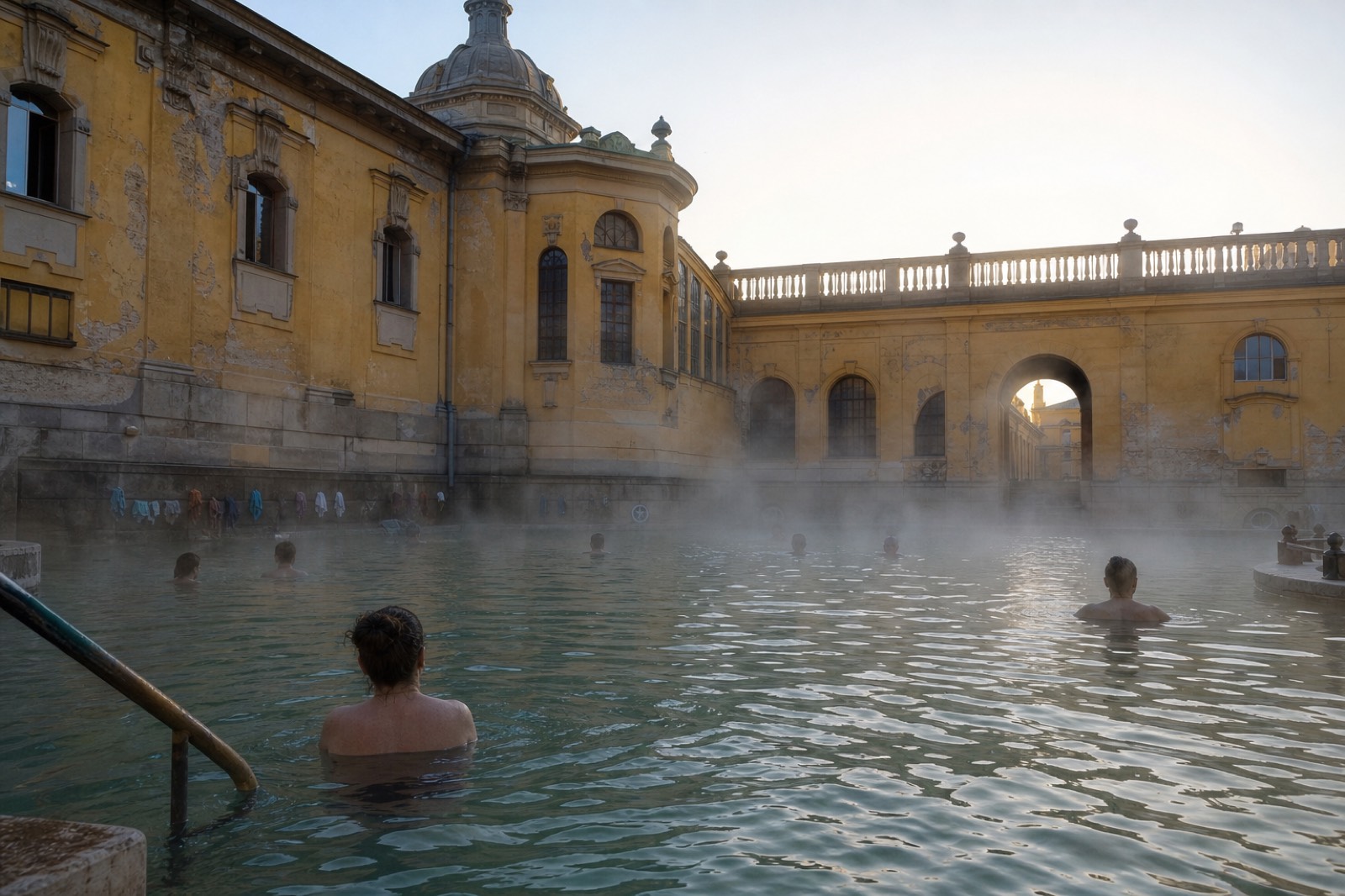
Short answer
Lukács is the neighbourhood thermal bath near Margaret Bridge where Budapest residents swim and soak as routine, and it is open in 2026. It is quieter and plainer than Széchenyi or Rudas, so it suits repeat visitors and crowd-avoiders more than first-timers. Book the Viator full-day admission or check current hours and tickets on lukacsfurdo.hu.
Cross Margaret Bridge to the Buda side before nine on a weekday and you can follow the swim bags. Older men with rolled towels under one arm, a woman in a wool coat with a swim cap poking out of her pocket, all walking the same easy line toward Lukács. I take guests over that bridge most weeks, and the change of pace is the whole point. At Széchenyi I am a guide managing a crowd. At Lukács I am just another person the regulars nod past on their way to the water.
What kind of bath is Lukács?
Lukács is a working neighbourhood thermal bath on the Buda side of Margaret Bridge, open in 2026 and used by residents the way other cities use a gym. It has less fame than Széchenyi and less drama than Rudas, and it is the one bath where local life outnumbers tourism on an ordinary morning.
Budapest earned its spa reputation honestly. The city sits on more than 100 medicinal geothermal springs and the largest thermal water cave system anywhere, and every famous bath is one expression of that same water. The bathing habit runs deep here in both senses. Romans were soaking at Aquincum, on the northern edge of today's city, long before Hungary existed, and the Ottomans added their domed bath houses in the 16th century. The "City of Spas" title itself dates back to the 1930s. Even the plumbing is dramatic by local standards: Széchenyi's medicinal water rises from a well 1,246 metres down, the second deepest in the city.
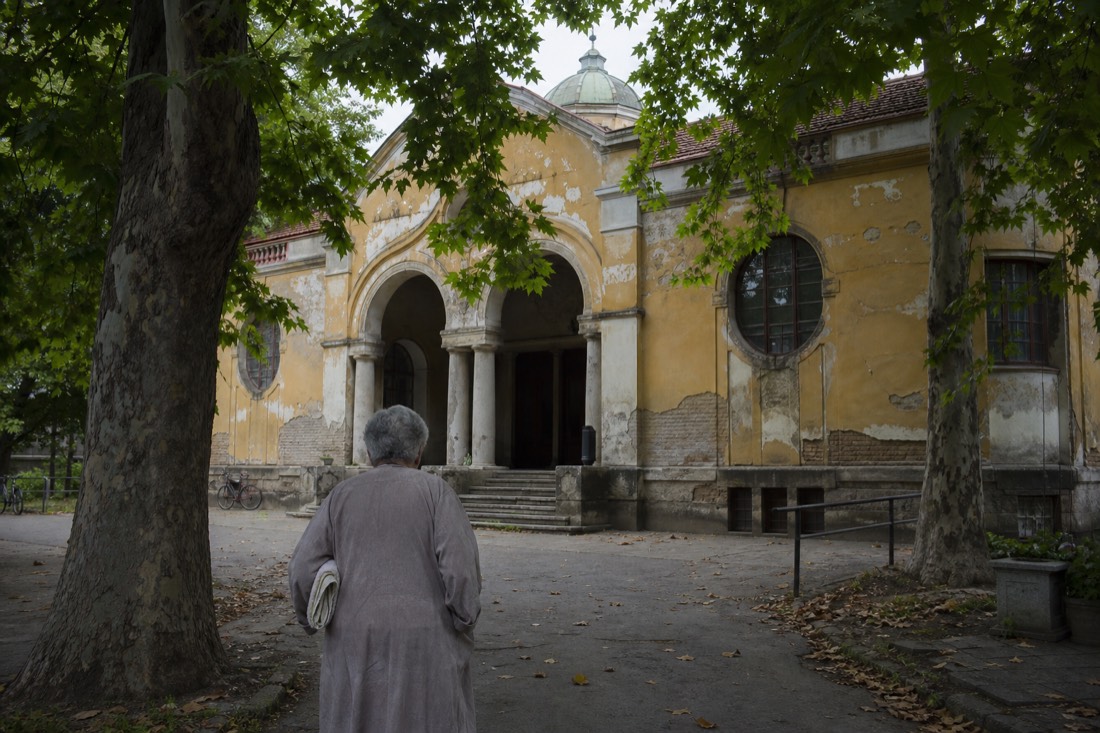
Lukács is the domestic expression of all that inheritance. The water here carries the same legal classification as everywhere else in town, medicinal under Hungarian law, but the building wears it without ceremony. Paint peels in places. Nobody minds.
One thing I will not do on this page is recite pool counts, temperatures, prices or opening hours for Lukács, because I could not verify them to this site's standard this month. Those specifics live on the official site, lukacsfurdo.hu, and that is the only version I would trust the week you travel. What I can tell you with confidence is that the bath is open and running: Lonely Planet's February 2026 coverage lists Lukács among the city's best open baths, which matters in a town where big names keep closing. Our live status check of every famous bath tracks the rest of the map.
Why do locals prefer Lukács?
Because it stays ordinary in the best sense. The pools are part of daily routine rather than a show: lap swimmers before work, pensioners settling into the warm water mid-morning, conversations that outlast the soak. The pace is slower, the crowd thinner, and nobody is performing for a camera.
Spend one morning there and the rhythm explains itself. Swimmers arrive early, do their lengths, and leave for the office with wet hair. Then the day shifts. By mid-morning the warm pools belong to pensioners who treat the water as a standing appointment, the same faces in the same corners, arguments about football picked up exactly where they were left the day before. I have stood in that water listening to a debate that clearly started sometime in the previous decade.
That texture is what Széchenyi's crowds flatten. In City Park you share the thermal pool with people filming each other. At Lukács a phone by the water would feel faintly rude, the way it would at somebody's kitchen table. The staff nod at regulars. Towels hang over rails like laundry. It is unpolished in the exact way a place gets when the people using it come back every week and would riot if you renovated the soul out of it.
There is also a practical logic underneath the affection. A bath you visit weekly has to work as infrastructure, not theatre. Locals want reliable lanes, water they trust, and a soak that fits between errands, and Lukács has delivered exactly that for generations of Buda households. The tourist economy optimises for the once-in-a-lifetime visit. Lukács optimises for the four-hundredth visit, and you can feel the difference within ten minutes of getting in the water.
Lukács is the most famous member of a whole family of baths that tourists rarely reach, alongside Dandár, Paskál and the Palatinus strand on Margaret Island. If that idea appeals, my guide to Budapest's local baths walks through the others too. Lukács is the gateway drug. It sits close enough to the centre that you can fold it into a normal sightseeing day, then decide whether to go deeper.
How is Lukács different from Széchenyi and Rudas?
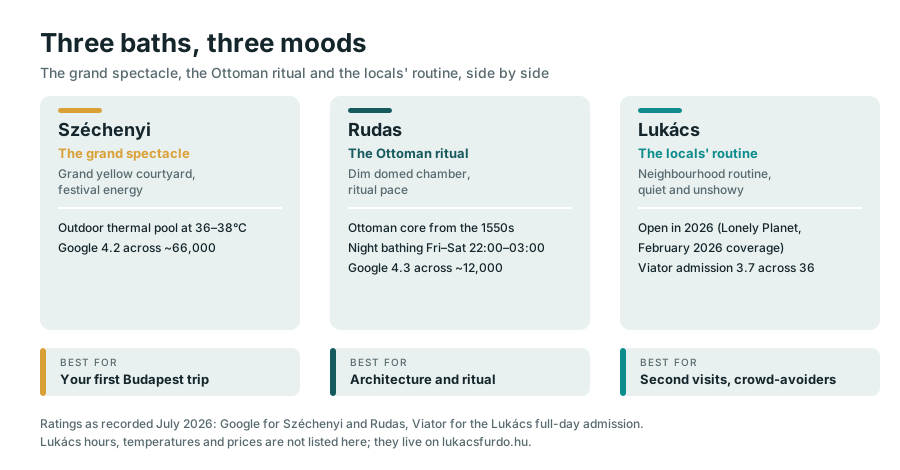
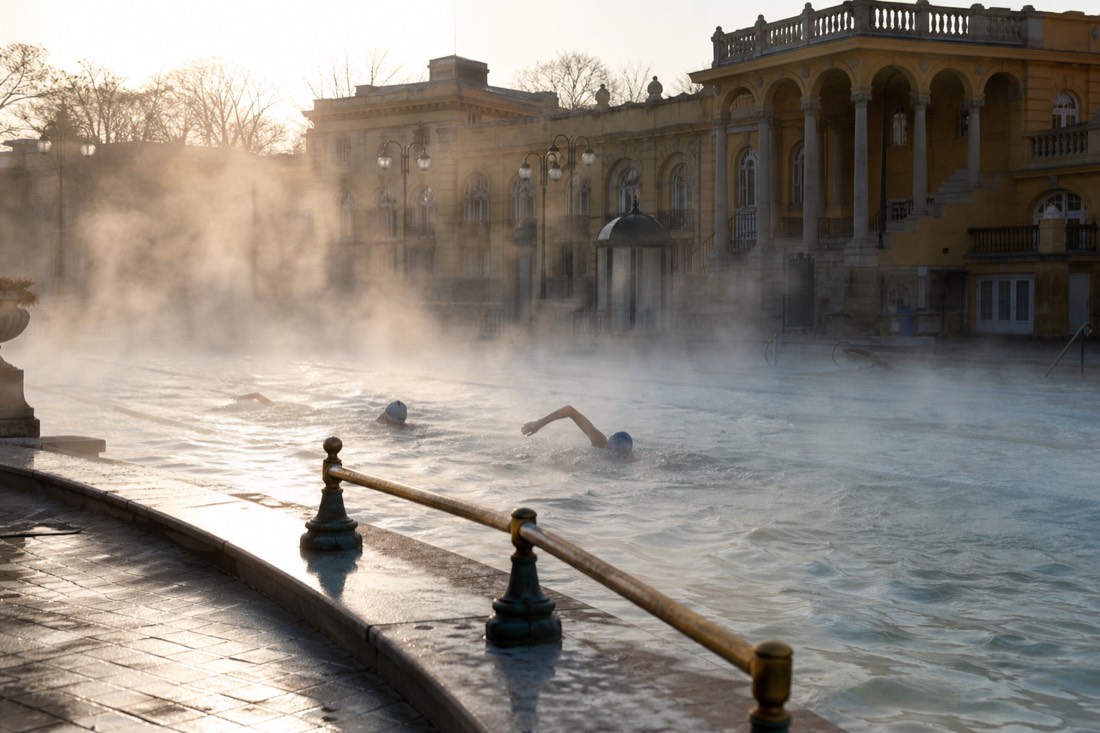
Széchenyi is the grand spectacle, Rudas is the Ottoman ritual, and Lukács is the everyday bath. Széchenyi gives you scale and photographs, Rudas gives you a 1550s dome and single-sex traditions, Lukács gives you routine, regulars and room to think. Same medicinal water culture, three entirely different moods.
The comparison in one view:
| Széchenyi | Rudas | Lukács | |
|---|---|---|---|
| The mood | Grand yellow courtyard, festival energy | Ottoman dome from the 1550s, dim and ritual | Neighbourhood routine, quiet and unshowy |
| The crowd | Tourists first, locals at opening time | Mixed, shaped by its single-sex mornings | Regulars, lap swimmers, pensioners |
| Signature moment | Steaming outdoors in the 36 to 38°C thermal pool | Friday and Saturday night bathing, 22:00 to 03:00 | A weekday morning with nowhere to be |
| Google reviews | 4.2 across roughly 66,000 | 4.3 across roughly 12,000 | Small online footprint; see the 3.7 reading below |
| Book online | GetYourGuide full-day pass, 4.3 across 26,787 reviews | GetYourGuide day pass with 3-course meal, 4.1 across 1,298 | Viator full-day admission, 3.7 across 36 |
A few of those details deserve their fine print. Széchenyi runs to 22:00 on Fridays, its one late weekday, per the official schedule on szechenyibath.hu, and its full-day pass is the easiest bath booking in the city. Rudas keeps the old Turkish customs alive: the Ottoman section is men-only on most weekday mornings, women-only all day Tuesday, and co-ed with swimsuits from 11:00, per the official opening-hours page. My Rudas guide unpacks that schedule properly, because it catches people out.
Lukács competes on none of that. No rooftop panorama pool, no festival courtyard. Its offer is that on a Tuesday morning you can have medicinal water, silence and the company of people who consider this normal life rather than a bucket-list stop. The full comparison of Budapest's baths ranks every open option side by side if you want the wider field.
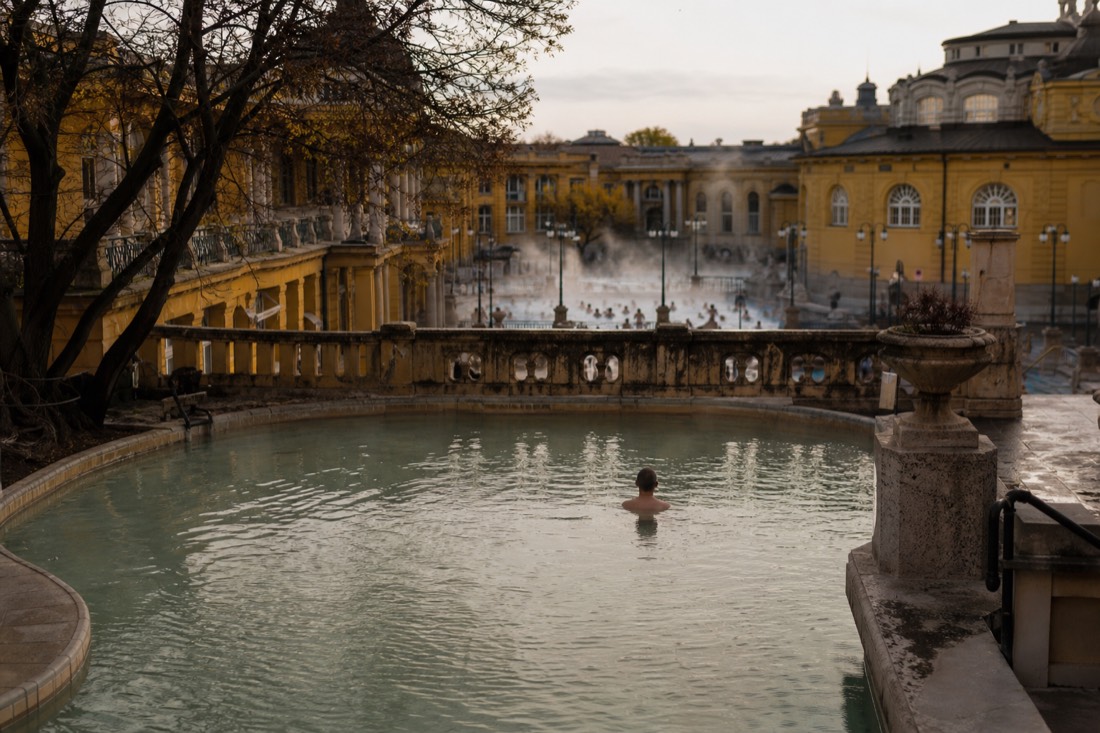
Is the 3.7 rating a red flag?
Not by itself. A 3.7 from just 36 Viator reviews is a small sample, not a verdict, and modest scores on plain admission tickets usually track disappointed expectations rather than a bad bath. People who arrive wanting Széchenyi's spectacle mark Lukács down. People who want a quiet local soak rate the same day very differently.
Look at the numbers in context. Széchenyi's day pass carries a 4.3 built from 26,787 reviews, a sample so large that no single bad morning can move it. Rudas's day pass sits mid-scale at 4.1 across 1,298, enough volume to mean something. The Lukács admission sits at 3.7 across 36. At that size, a handful of disappointed visitors swings the score by whole tenths. Statistically it tells you almost nothing about the bath and quite a lot about who bought the ticket. For scale: the bath's own walk-in public dwarfs those 36 online buyers every single week, and none of the regulars are filing Viator reviews.
And who buys it? Mostly travellers working down a list of famous Budapest baths, primed by photos of Széchenyi's yellow courtyard. My honest reading is that the modest score measures the gap between that expectation and what Lukács actually is. Reviewers seem to want it to be a postcard, and it is a swimming and soaking routine with peeling paint and pensioners. Nobody warned them they were buying the everyday bath, so some of them graded the everyday bath as a failed spectacle.
I would treat one signal as genuinely useful: do not book Lukács as your only bath on a first trip if grandeur is what you are flying in for. That is the mismatch the reviews keep recording. Treat the 3.7 as a sorting mechanism rather than a warning, and you can decide which side of it you are on before spending a forint.
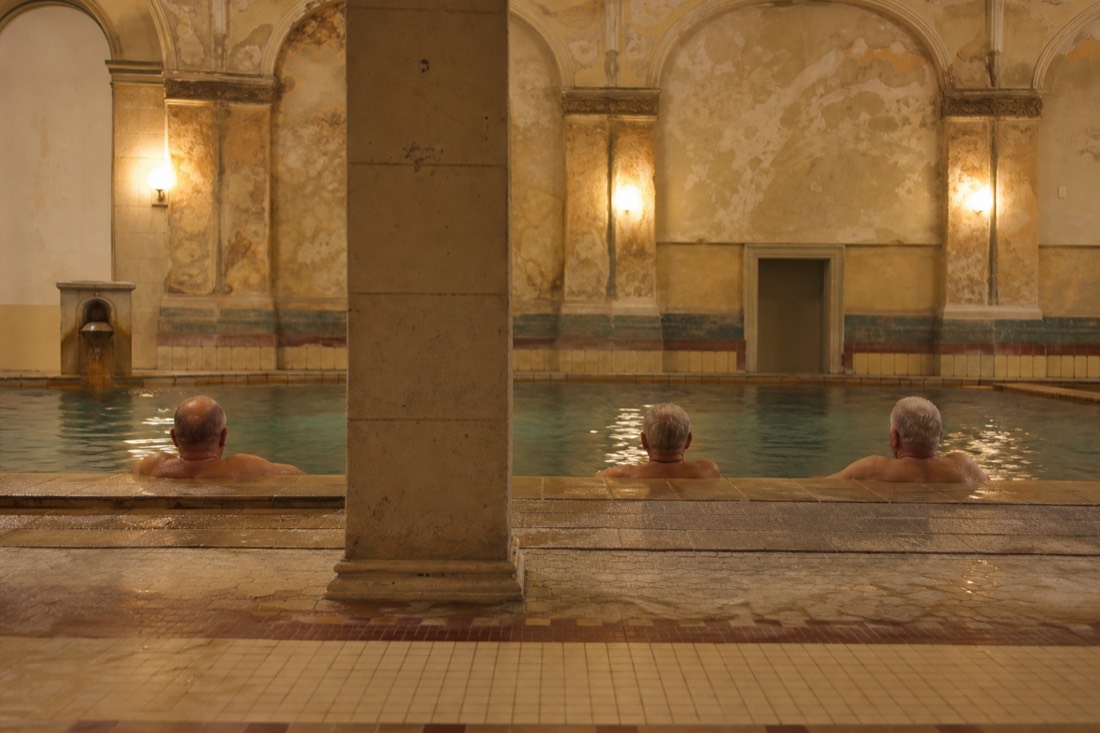
How do you get tickets to Lukács?
Three honest routes: book the full-day admission on Viator before you travel, check current tickets and hours on the official site lukacsfurdo.hu, or turn up the way locals do. I have never watched a Széchenyi-style queue form at Lukács, though summer afternoons get busier everywhere in this city.
| Route | What it gives you | What to check first |
|---|---|---|
| Viator full-day admission | Entry sorted before you fly, one thing off the list | The listing's own cancellation terms, and the 3.7 across 36 reviews read with the context above |
| Official site, lukacsfurdo.hu | Current hours, tickets and pool status straight from the source | Seasonal schedules; service hours at Budapest baths shift more than blogs admit |
| At the door | The local way in, chosen by the morning's weather | Your own timing; mornings are the bath at its best |
If you like arriving with the ticket handled, book the full-day Lukács admission on Viator. I quote its rating every time so there are no surprises: 3.7 across 36 reviews, a modest score from a small sample, for the reasons the last section walks through. It is a plain entry ticket, not an experience package, and it suits people who want zero friction on the day.
The one mistake I see is travellers importing Széchenyi urgency into a Lukács plan. The big bath's pass gets flagged as likely to sell out, and for good reason. Lukács does not run on that scarcity. What it runs on is rhythm, so the real planning question is not whether you can get in but when you should. Go in the morning. Everything I love about the place happens before noon.

Who should pick Lukács?
Pick Lukács if this is not your first Budapest bath, if crowds drain you, or if you want to sit in the water beside people who actually live here. First-timers usually get more from Széchenyi, and architecture lovers from Rudas. Lukács rewards the second visit and the slow traveller.
| You are | Your best call |
|---|---|
| On a first trip with time for one bath | Széchenyi, the full spectacle, easiest to book |
| Back for a second trip, or allergic to crowds | Lukács, mornings especially |
| Chasing Ottoman architecture and ritual | Rudas, with its 1550s dome and night bathing |
| Staying in Budapest for weeks or months | Lukács as your standing appointment, like the locals |
| After a party rather than a soak | Sparty at Széchenyi, Saturday nights, strictly 18+ |
There is no wrong answer in that table, only wrong expectations. The travellers I have watched fall hardest for Lukács are the ones on their third or fourth day, slightly worn out from doing Budapest at full volume, who wanted an hour that did not feel like an attraction. They come out quieter than they went in. Several have told me it was the first moment of the trip that felt like the city rather than a show about the city.
So my closing advice is sequence, not selection. See Széchenyi for the postcard. Take Rudas for the history. Then, if Budapest has gotten under your skin even slightly, give Lukács a morning and find out whether you are a visitor here or secretly a regular who lives somewhere else.
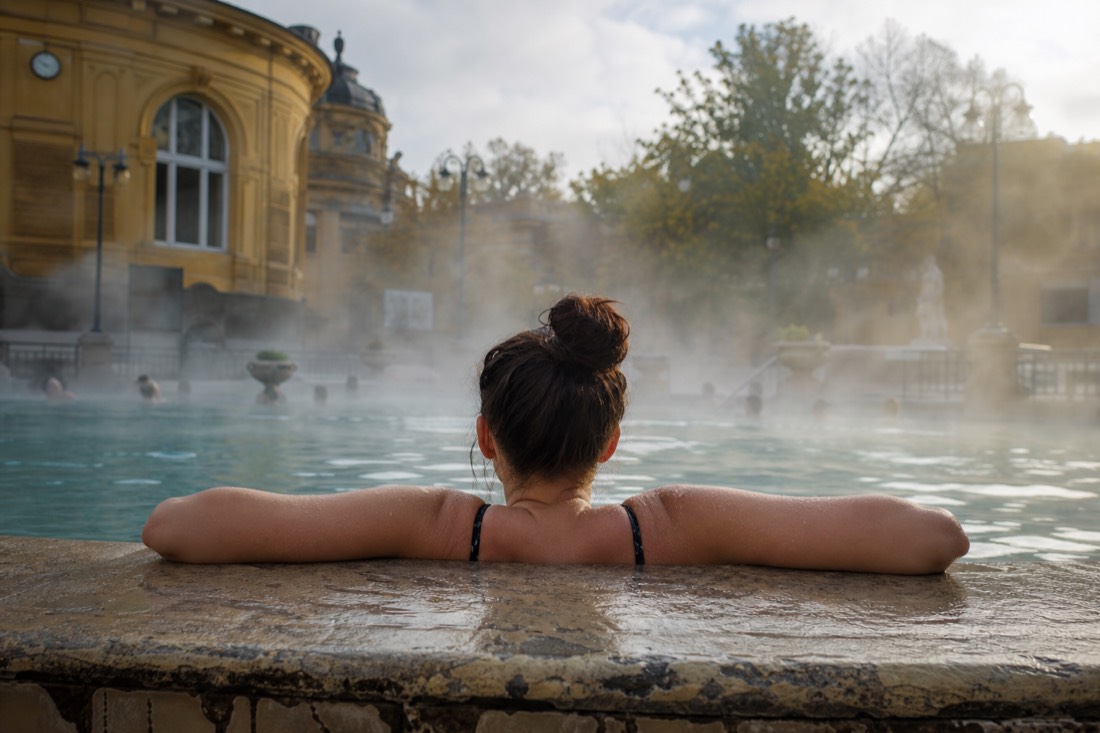
How does an ordinary weekday at Lukács actually unfold?
In shifts. From what I have watched over years of walking guests across Margaret Bridge, the day opens with lap swimmers who leave for work, hands over to pensioners who treat the warm water as a standing appointment, thins at lunchtime, and picks up again after offices empty. Arrive in the first shift if you want lanes, the second if you want the local mood, the third if you want to blend in.
I am not going to pin clock times to this, because the bath's own hours are on lukacsfurdo.hu and mine would only be a paraphrase that ages. What I can give you is the rhythm, and the rhythm is remarkably stable. It is a standing pattern, not one memorable morning, and it is the single most useful thing to know before you choose your hour.
| Shift of the day | Who is in the water | What it means for a visitor |
|---|---|---|
| First shift, straight after opening | Lap swimmers with wet hair and somewhere to be | Lanes are in use and taken seriously; soak, do not drift into a swimmer's line |
| Mid-morning | Pensioners in their usual corners, conversations that never end | The bath at its most local; keep your voice down and you will be nodded at |
| Around midday | A lull, some regulars leave for lunch | The easiest time to have a warm pool nearly to yourself |
| Early afternoon | A slow trickle, the odd tourist who read this page | Still calm; a good slot if mornings are not your thing |
| After work | Neighbourhood swimmers and soakers arriving in a wave | Busier again, but busy by Lukács standards, not by Széchenyi's |
| Last hour | Regulars finishing their routine | Quiet again; check the official closing time so you are not the person being waved out |
Notice what is missing from that table: a queue outside, tour groups, a moment when the water is too crowded to move. Széchenyi's shape is a single midday peak that the reviews I keep on file describe over and over as the reason to go early. Lukács is a series of small tides, and any of them can be yours. Swimmers should bring a cap out of respect for the lane pool, the same courtesy the Széchenyi 50 m pool requires for lap swimming, and confirm the local rule at the door. For the wider kit and manners question, my etiquette and what-to-wear guide applies here as much as anywhere, with one addition: at Lukács, act like a regular even on your first visit and you will be treated like one.
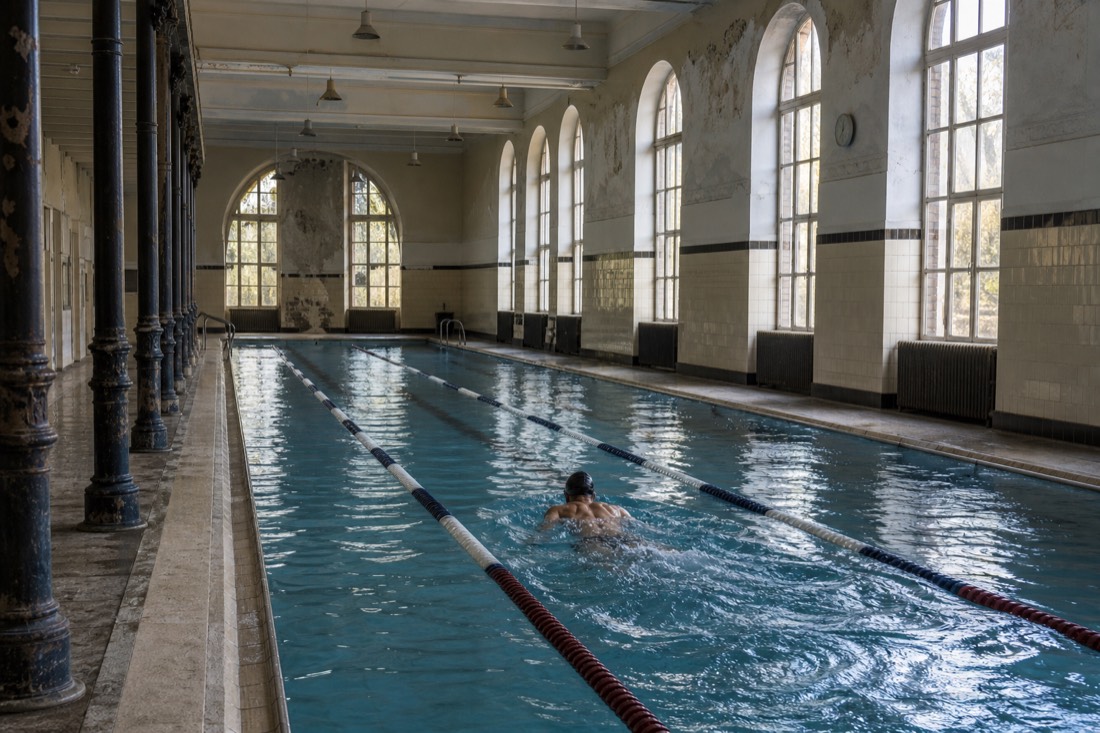
How much does one review actually move a bath's rating?
At 36 reviews, a great deal. Rough arithmetic on the displayed figures says a single one-star review knocks the Lukács ticket's 3.7 down by about 0.07, and two of them are enough to drop it a whole tenth. Széchenyi's pass would need roughly 800 one-star reviews to lose the same tenth. Small samples swing; that is the whole story of the 3.7.
The earlier section argued that the 3.7 measures expectations more than the bath. This one shows why the number cannot carry much weight even in principle. The maths is plain division, done on the ratings and counts these products showed when I checked them, and I have rounded honestly. Displayed ratings are themselves rounded, so treat every figure below as an illustration of scale, not a forecast.
| Product | Displayed rating and count | One new one-star review moves it by about | One-star reviews needed to drop a full tenth |
|---|---|---|---|
| Lukács full-day admission, Viator | 3.7 across 36 | 0.07 | Two |
| Beer spa, GetYourGuide | 4.7 across 58 | 0.06 | Two |
| Rudas day pass with meal, GetYourGuide | 4.1 across 1,298 | 0.002 | Around 40 |
| Sparty, GetYourGuide | 4.1 across 1,731 | 0.002 | Around 60 |
| Széchenyi full-day pass, GetYourGuide | 4.3 across 26,787 | 0.0001 | Around 800 |
Read the last column and the point makes itself. Two grumpy visitors on the same rainy Tuesday can move Lukács from 3.7 to 3.6. Two delighted ones can push it toward 3.8. Nothing short of a season-long collapse could move Széchenyi's score by the same amount, which is why the big pass's 4.3 is a genuinely informative number and the small ticket's 3.7 is mostly noise with a story attached. The same caution cuts the other way for the beer spa, whose cheerful 4.7 also rests on a sample of 58 and which I always quote with the count for exactly this reason.
What should you do with that? Read the reviews, not the score. On a sample this size the text tells you far more than the average: who bought the ticket, what they expected, and whether their disappointment would be yours. My Is a Budapest bath day worth it piece walks through the same logic for the whole city, because the honest answer at every bath is the same. Ratings sort travellers; they do not grade water.
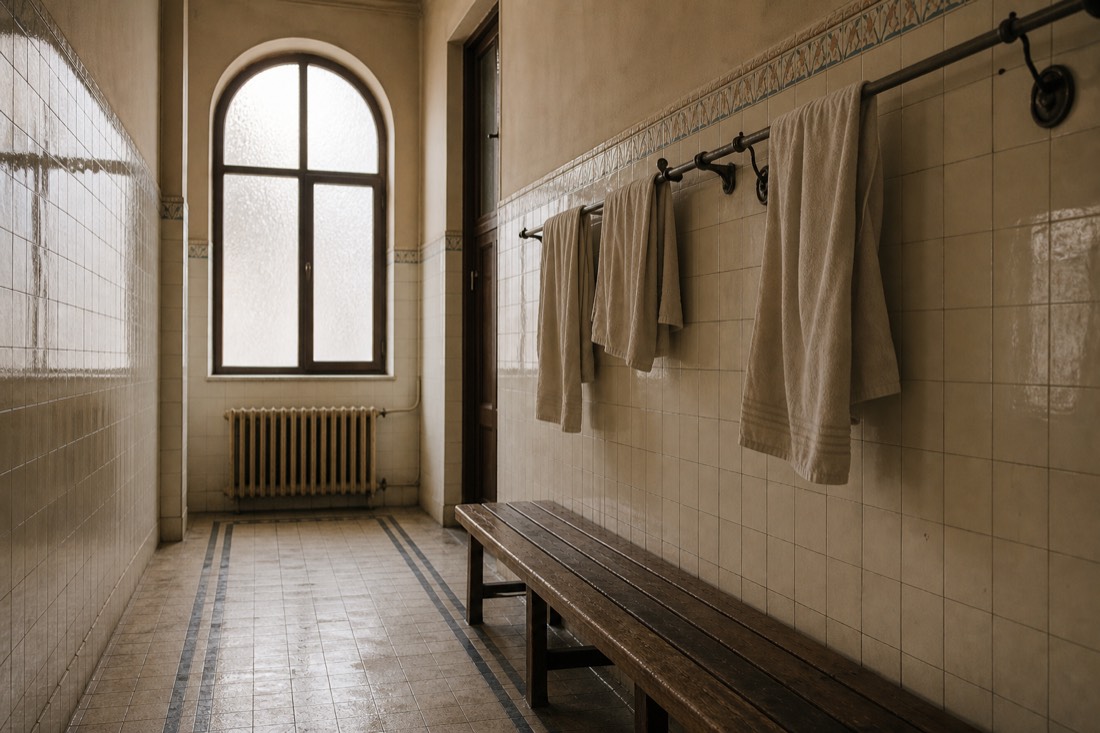
Lukács, the local baths or Széchenyi: which rung of the ladder are you on?
Think of it as a ladder from spectacle to routine. Széchenyi is the top rung, the grand courtyard with a bookable pass. Lukács is the middle, a famous name that still runs on neighbourhood habit and has one online ticket. Dandár, Paskál and the Palatinus strand are the bottom rung, door-ticket baths with no platform listing at all. Climb down as your trips add up.
The ladder is not a ranking of quality. It is a ranking of how much the bath is arranged for you versus for the people who live beside it. Széchenyi has an English booking funnel and a likely-to-sell-out flag for good reason. The local three have a Hungarian website and a cashier. Lukács sits between them, and that in-between position is why I send so many second-trip visitors there first.
| Rung | Bath | Where | Character in a line | How you get in | Best for |
|---|---|---|---|---|---|
| Top | Széchenyi | City Park, Pest | The 1913 palace, outdoor pools at 36 to 38°C, festival energy | GetYourGuide full-day pass, 4.3 across 26,787, or official | First trip, the postcard |
| Middle | Lukács | Buda side of Margaret Bridge | Famous name, local rhythm, peeling paint and regulars | Viator full-day admission, 3.7 across 36, official site, or the door | Second trip, crowd-avoiders |
| Lower | Dandár | A neighbourhood bath in Pest | Small, calm, a regulars' crowd | Door only, details on dandarfurdo.hu | Return visitors who want silence |
| Lower | Paskál | Residential Pest | The weekly-habit bath, no event about it | Door only, details on paskalfurdo.hu | Long stays, slow travellers |
| Lower | Palatinus strand | Margaret Island | Open-air lido, grass and pools, family-paced, seasonal | Door only, details on palatinusstrand.hu | Hot days, children, whole afternoons |
I have left the local three's hours, pools and prices off deliberately, because we did not verify them and their official sites are the only version to trust. What I can vouch for is character, and the character shifts by rung in a way that is easy to feel. Széchenyi asks nothing of you but a ticket. Lukács asks you to match the locals' pace. Dandár and Paskál ask you to want a bath for its own sake, and the Palatinus asks for a sunny day. My local baths guide walks each of the bottom rung properly, and if you are working out where to sleep so the right rung is a walk away, the where-to-stay guide puts Margaret Bridge on the map for exactly this reason.
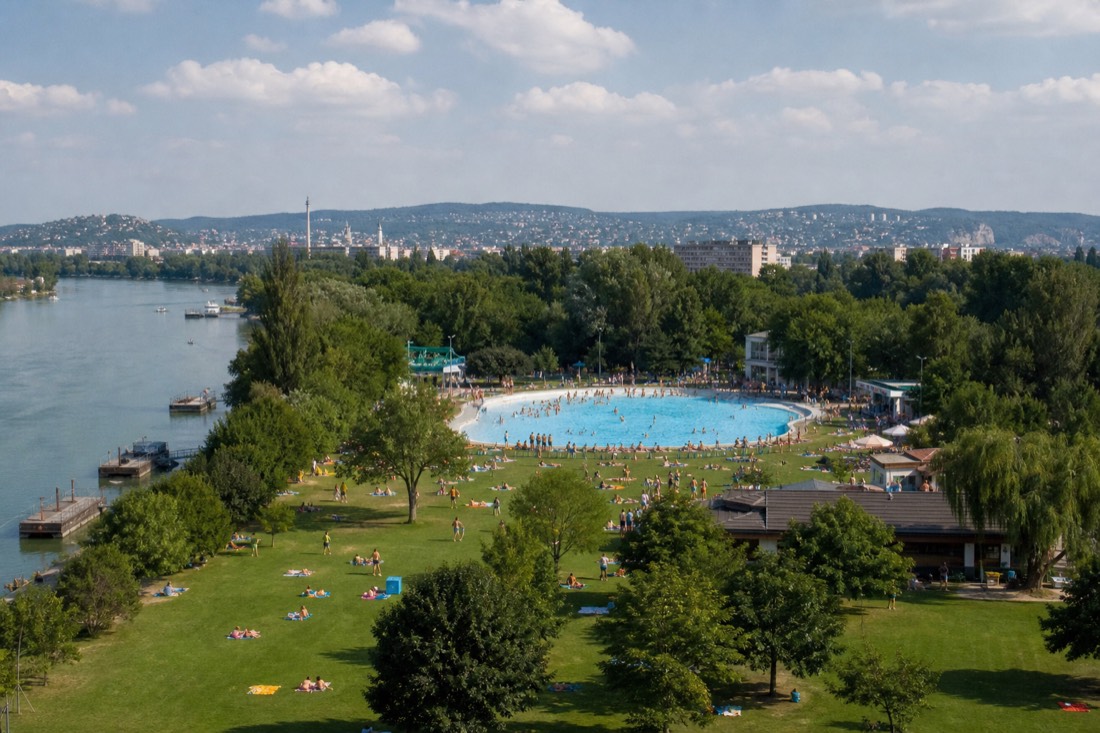
How does Gábor fold Lukács into a Budapest trip?
As the second bath, almost never the first, and always in the morning. On a short trip it pairs with a walk over Margaret Bridge and an hour on the island. On a longer stay it becomes the standing appointment between the famous days. For anyone I am guiding for a week, it is the morning I put in the calendar for the day after Széchenyi.
I have been guiding bath visitors since 2022, more than a thousand of them by my own count, and this is the pairing logic that has settled out of all those itineraries. It is a habit rather than a rule, but it holds often enough to write down. Lukács works best when the traveller has already seen the spectacle and is ready for the city to feel ordinary in a good way.
| Trip shape | Where Lukács goes | What it pairs with |
|---|---|---|
| Two nights, one bath | It does not; book the Széchenyi full-day pass and come back for Lukács next time | The postcard first |
| Three or four nights | Morning of the day after Széchenyi | A walk over Margaret Bridge, coffee, then the island in the afternoon |
| A week or more | A repeat morning, twice if it takes | Rudas on a day that fits its schedule; the Rudas guide explains why that needs reading first |
| Buda-side base near Margaret Bridge | Your default bath, walkable | Veli Bej is on the same side, door tickets only, and closed 13 to 31 August 2026 for maintenance |
| A hot summer day | Swap the afternoon for the Palatinus strand on the island | Lukács early, lido later, no bookings either way |
| A rainy or cold morning | The best kind of Lukács morning | Warm water, quiet corridors, nowhere to be |
Two things I tell people every time. First, Lukács does not carry the sell-out pressure of the big pass, so it is the one bath you can leave unbooked and slot in when the weather or your energy decides. Second, if the trip is a couple's trip, Lukács is the morning, Rudas is the night; my couples' bath piece explains that split. Sequence, again, is the whole art. Széchenyi teaches you what the fuss is about. Lukács teaches you what the fuss is hiding.
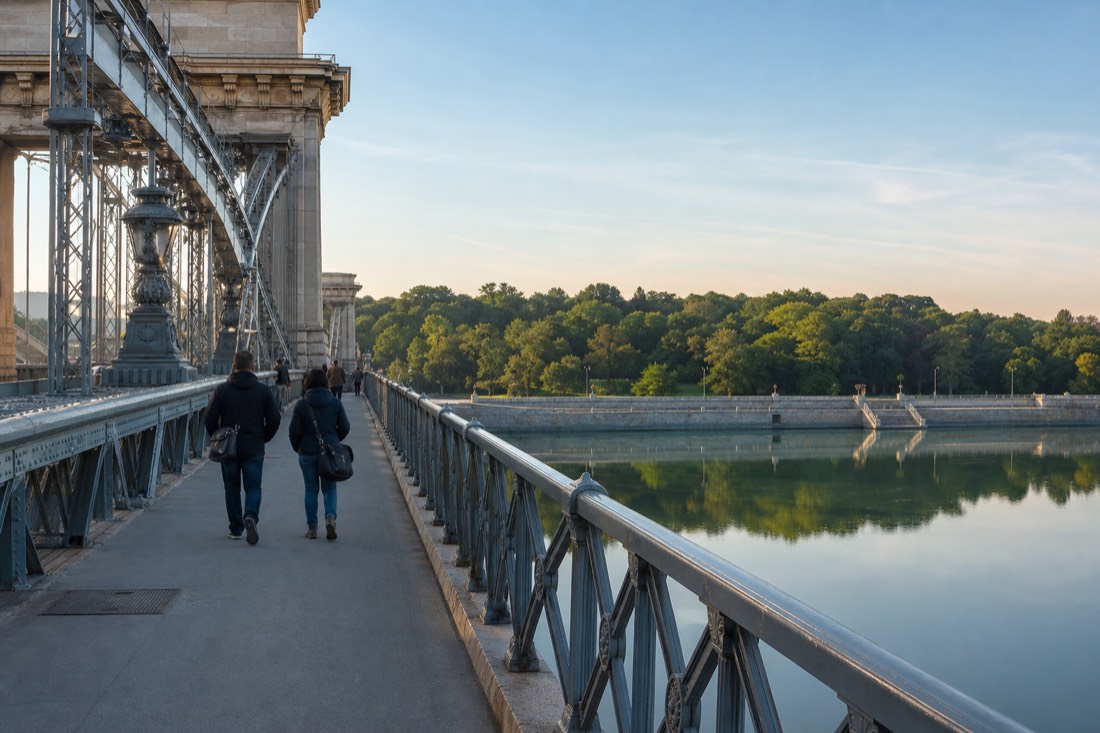
Is Lukács Baths open in 2026?
Yes. Lonely Planet's February 2026 coverage lists Lukács among Budapest's best open baths, and the official site lukacsfurdo.hu is live with current information. Check it close to your visit, since Budapest bath schedules shift with seasons and maintenance.
What are the opening hours and prices at Lukács?
We deliberately do not print them, because we could not verify current figures to this site's standard. The official site, lukacsfurdo.hu, carries the live hours, tickets and pool information, and it is the only source worth trusting the week you travel.
Is the 3.7 rating on the Lukács ticket a bad sign?
Not on its own. It comes from just 36 Viator reviews, a sample small enough that a few disappointed visitors move the score. The pattern reads as expectation mismatch: people wanting Széchenyi's grandeur grade Lukács down, while quiet-bath fans tend to leave happy.
Can I book Lukács online?
Yes, through the full-day admission ticket on Viator, rated 3.7 across 36 reviews. Otherwise use the official site for current ticket options or buy on the day. Lukács does not carry the sell-out pressure that Széchenyi's pass does.
Should Lukács be my first Budapest bath?
Usually not. First-timers tend to get more from Széchenyi's scale or Rudas's Ottoman atmosphere. Lukács shines as a second bath, a repeat-trip ritual, or a crowd-free morning for travellers who prefer local rhythm to spectacle.